What Is The Artist’s Way? A Simple Guide For Beginners And Re‑Beginners

What is the Artist’s Way is a simple guide for beginners and re-beginners.
The Artist’s Way is a 12-week creativity reset using two core habits—Morning Pages and Artist Dates—to quiet creative self-doubt, rebuild self-trust, and bring play back into your life (even if you don’t think you’re “an artist”).
The Artist’s Way isn’t about being an artist.
It’s about reconnecting with what matters, beyond productivity.
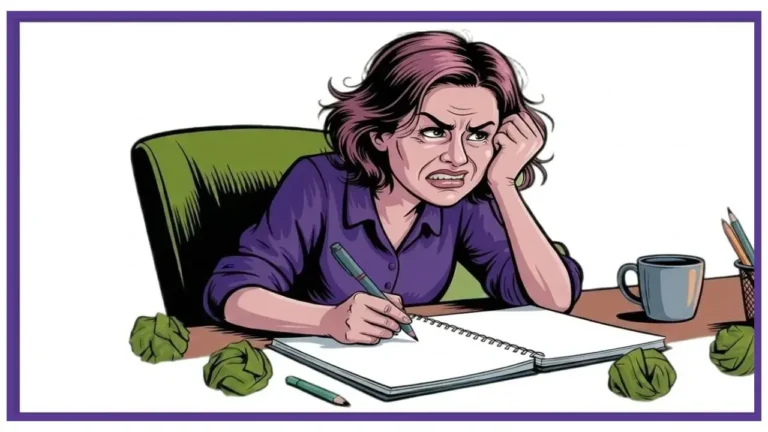
You bought the book. You highlighted the pages. Maybe you even made it to week 3 or 4. Then life, burnout, or a sharp wave of self doubt knocked you off track.
Did you start the Artist’s Way before and quit? Many have. This guide is for you, the beginners and the re-beginners, who still feel a quiet pull toward your creative life and are resistant to try again.
The Artist’s Way is a 12-week creative recovery program by Julia Cameron. It uses gentle tools like Morning Pages and Artist Dates to soften fear, quiet the inner critic, and help you reconnect with your inner artist.
And no, you do not have to be an official artist to reap the benefits. I was a truck driver the first time I went through the book. I am now winding down a 30 year lucrative career as a jewelry designer – maker and glass artist.
This guide will walk you through what it is, what the journey often feels like week by week and why so many people stop halfway.
How to use this guide
Fair warning: I got a little carried away — this is a long article. You don’t need to read it straight through. Skim, wander, take what you need, and leave the rest. Kinda my approach to life.
For a walkthrough of The Artist’s Way book Introduction see The Artist’s Way Introduction Overview | What the Book Is (and Isn’t)
What Is The Artist’s Way and Why Do So Many Creatives Swear by It?
The Artist’s Way is a 12 week program for creative recovery. It was created by writer Julia Cameron in the nineties and first shared as a book filled with readings, exercises, and weekly themes.
The Artist’s Way treats creativity as a natural part of being human, not a prize reserved for “real” artists. It blends spiritual ideas (like trusting something larger than your fear) with practical tools (like daily writing and weekly solo outings) to unwind blocks such as perfectionism, self-doubt, and old criticism that still stings.
Writers, painters, musicians, business owners, and “I am not creative at all” people have used The Artist’s Way because it speaks to a deep ache – the sense that something inside wants to make, explore, and play again.
Have you ever spent time giggling with little kids? Little ones create with such wild abandon, they know how to play! Why did we stop playing? Yes, we have responsibilites, and still we can allow a few minutes of play into our day.
If you have tried the program before and stopped, you have already felt its pull. You might have loved the idea, then hit a wall somewhere around weeks 3 to 6. This is more common than you may think. It usually means the tools were working and you needed slower pacing, more support, or a kinder way to hold yourself.
A gentle note…
If you’re in the middle of a personal crisis, or journaling feels like it opens things that are hard to close, it’s okay to slow down or get extra support.
The Artist’s Way can work beautifully alongside therapy or coaching, but it’s not meant to replace them.
A 12-Week Creative Recovery Program in Book Form
The book is set up as 12 chapters, one for each week of the process. Each chapter focuses on a theme, like safety, identity, power, or possibility.
Every week, you read a bit, then do exercises. These can include:
- Writing prompts
- Lists and reflections
- Simple actions in daily life
The Artist’s Way is not a quick tip list. It is more like a guided journey. You are asked to show up again and again, listen to your thoughts, and try small experiments in your real life. I have followed the Artist’s way for 30 years as both a member of different groups and as a faciliator.
One of the most comforting ideas in the book is that everyone has an inner artist. You do not need to sell your work or even show it to anyone for it to “count.” If you feel the desire to write, draw, sew, sing, build, cook without a recipe, or just feel more alive, you are the person this book is written for.
Who The Artist’s Way Is Really For (Hint – It’s Not Just “Real” Artists)
You might see the title and think, “That is not me. I am not an artist.” But the people who find healing in this work are often:
- Blocked writers who cannot finish a draft
- Burned-out professionals who feel like their creative spark dried up
- Parents who lost touch with their playful side
- People who grew up with harsh criticism and learned to hide their ideas
- Folks in midlife asking, “Is this it? What about the rest of me?”
If you have started The Artist’s Way before and quit, you might also carry shame. Maybe the book is still on your shelf like a quiet reminder of “another thing I did not finish.”
That shame is very common. It also lies. Stopping does not mean you cannot do it. It only means you tried to heal your creativity under pressure, without the right support, while still living a full life.
The Core Tools of The Artist’s Way Explained in Simple Language
At the center of The Artist’s Way are a few key tools. You will see them again and again through the 12 weeks.
The two most important are Morning Pages and Artist Dates. There are also supporting tools like weekly tasks, affirmations, and check-ins.
You do not have to do every single item perfectly to feel a shift. These tools can bend to fit your life, your brain, and your energy level. After 30 years of practicing the Artist’s Way there is one task in particular I still have not aced. Truth is I have failed miserably.
And you know what? My life is still magical! Progress not perfection is a motto I live by.
Morning Pages – A Daily Brain Dump to Clear Creative Clutter
Morning Pages are three pages of longhand, stream-of-consciousness writing done first thing in the morning. This is one of the practices I give myself an A+ in. And here is an image of a pile of old journals I came across. I thought I had burned them all!

You write whatever comes to mind, such as:
- “I am tired and I do not want to write.”
- “I have so many emails today.”
- “I wish I had more time to paint.”
You can complain, plan, rant, list, dream, or repeat the same line over and over until something else shows up. No one reads your Morning Pages, not even you most of the time. The point is to clear the mental noise so you can hear yourself more clearly.
Over time, this simple habit can:
- Soften your inner critic
- Reveal patterns, desires, and ideas
- Give you a safe place to be honest
If three pages feel impossible, especially if you are busy or neurodivergent, you can start smaller. Try:
- One page every morning
- Or three short bursts during the day
- Or using a timer for 10 minutes instead of counting pages
These tweaks still honor the spirit of Morning Pages: regular, private, messy writing that clears space in your mind.
Artist Dates – Solo Playtime to Refuel Your Inner Artist
An Artist Date is a weekly 1 to 2 hour block of solo “play.” You go somewhere or do something that feels fun, curious, or childlike, all by yourself. I resisted the Artist Date until I forced myself to try it and then it went from a thing I hated to do to a thing I love doing!
Low-cost Artist Date ideas include:
- Visiting a thrift store to look at colors and textures
- Sitting in a park and sketching trees or people
- Listening to live music at a café
- Exploring a nearby neighborhood you have never walked through
- Going to a library and browsing picture books
- Strolling busy city streets
Going alone matters. It gives your inner artist space to notice, wander, and follow tiny sparks of interest without having to take care of anyone else’s needs.
These outings fill your inner “well” with images, sounds, and sensations. When your well is full, ideas come more easily. You feel more playful. Life feels a little less flat.
When I first forced myself to take time off and wander the city for a few hours, I came home so inspired I felt like I might burst.
Other Helpful Practices in The Artist’s Way (Tasks, Walks, and Check-Ins)
Along with Morning Pages and Artist Dates, The Artist’s Way offers:
- Weekly tasks and exercises that help you look at old beliefs
- Creative affirmations to gently replace harsh self-talk
- Regular check-ins to notice what changed and what you resisted
You do not need to complete every single task to benefit. Some weeks you might do many. Other weeks you might only manage Morning Pages and one small exercise.
The Emotional Arc of the 12 Weeks
Most people experience the 12 weeks in three emotional phases:
- Weeks 1–3: Safety & Starting
Hopeful, awkward, curious, a little self-conscious - Weeks 4–8: Resistance & Emotion
Doubt, anger, boredom, grief, wanting to quit - Weeks 9–12: Integration & Confidence
Clearer voice, braver choices, gentler self-trust
The journey through The Artist’s Way is less about ticking off chapters and more about how you feel and what shifts inside you.
Here is a simple way to picture the process.
It often gets harder before it gets easier. That is part of the work, hang in there.
The Early Weeks – Safety, Trust, and Letting Yourself Be a Beginner
At first, The Artist’s Way invites you to notice your old stories about creativity.
Maybe you hear lines in your head like “I am not talented,” “It is too late,” or “This is silly.” The early weeks help you see those thoughts and start to question them. My family laughed at me when I told the I was going to make a living as a glass beadmaker.
Many people feel excited during this phase. Buying a fresh notebook and planning Artist Dates can feel hopeful and new. At the same time, Morning Pages might feel awkward or boring, and going on a solo Artist Date might feel weird.
Awkwardness is a sign that you are trying something new and your brain is adjusting. If it feels awkward, you’re doing it right.
The Middle Stretch – Resistance, Emotions, and Wanting to Quit
Weeks 4 to 8 are the most common “danger zone,” especially for people doing The Artist’s Way alone.
During this middle section:
- Old memories can float up
- You might feel anger about lost time or past criticism
- Your schedule might feel too full to keep up
- Boredom or doubt can make the work feel pointless
This is where many people close the book. It feels safer to stay busy than to sit with all those feelings. I cannot imagine going through this book alone without a core group of support.
We all need cheer leaders. Yes, I am talking to all the lone rangers out there like I was and still tend to be.
This messy middle of the book is often where deep growth starts. With enough support, slower pacing, and ways to calm your nervous system, you can move through this stretch instead of bailing on yourself again.
Wanting to quit is often a sign the work is reaching something real.
The Final Weeks – New Confidence and Planning Life After Week 12
The last part of The Artist’s Way often feels more grounded.
You might notice:
- More creative energy
- Small brave steps, like sharing your work or setting a boundary
- A softer inner voice when you try new things
Not every dream will be solved in 12 weeks. That is unrealistic. The real gift is a new relationship with your creativity and with yourself. The first time a group of friends and I went through the book 2 of us quit our paying jobs and started our own businesses.
We loved the direction we were going in so much that when we finished the last chapter (12) we celebrated and met the following week to start chapter one again. We did this for years! I always pick up a new nugget every time I go through the book.
The goal isn’t a finished dream — it’s a changed relationship with yourself.
A Simple Week-by-Week Snapshot of The Artist’s Way
About the word “week”
In The Artist’s Way book, each chapter is labeled as a “week.”
In practice, many people move more slowly. In The Artist’s Way Reimagined™, we spend about a month per chapter, allowing time for reflection, rest, and real life.
Think of each “week” below as a theme, not a deadline.
A Simple 12-Week Snapshot of The Artist’s Way
Below is a plain-language overview of what most people experience in each week.
This is not a checklist. It’s a map, so you know where you are when things feel wobbly.
You do not need to complete every exercise perfectly. Showing up gently is enough.
Week 1 – Recovering a Sense of Safety
Theme: It’s safe to begin
Often feels like: Excited, awkward, skeptical
Focus: Starting Morning Pages, noticing self-criticism
Small win: You show up at all
Week 2 – Recovering a Sense of Identity
Theme: Who am I, really?
Often feels like: Tender, reflective, emotional
Focus: Old labels, dreams you set aside
Small win: You name something you still care about
Week 3 – Recovering a Sense of Power
Theme: Taking small creative risks
Often feels like: Hopeful, then resistant
Focus: Letting yourself want what you want
Small win: You do one thing just because it delights you
Week 4 – Recovering a Sense of Integrity
Theme: Where you leak energy
Often feels like: Irritated, honest, uncomfortable
Focus: Boundaries, obligations, people-pleasing
Small win: You notice what drains you
(often explored over several weeks in a slower-paced program)
Week 5 – Recovering a Sense of Possibility
Theme: Expanding what feels allowed
Often feels like: Playful, then doubtful
Focus: Dreams, fantasies, “what if” thinking
Small win: You imagine without shutting yourself down
Week 6 – Recovering a Sense of Abundance
Theme: Enoughness
Often feels like: Scarcity stories come up
Focus: Money fears, comparison, worth
Small win: You challenge one limiting belief
Week 7 – Recovering a Sense of Connection
Theme: You’re not alone
Often feels like: Vulnerable, reflective
Focus: Support, isolation, creative friendships
Small win: You let yourself be seen a little
Week 8 – Recovering a Sense of Strength
Theme: Staying with it
Often feels like: Tired, resistant, wanting to quit
Focus: Perseverance without forcing
Small win: You keep going gently
Week 9 – Recovering a Sense of Compassion
Theme: Being kind to yourself
Often feels like: Emotional, relieving
Focus: Self-talk, forgiveness, softness
Small win: You speak to yourself with care
Week 10 – Recovering a Sense of Self-Protection
Theme: Protecting your creative energy
Often feels like: Empowered, cautious
Focus: Saying no, reducing overwhelm
Small win: You guard your time or attention
Week 11 – Recovering a Sense of Autonomy
Theme: Trusting your inner guidance
Often feels like: Clearer, steadier
Focus: Choice, intuition, direction
Small win: You follow your own signal
Week 12 – Recovering a Sense of Faith
Theme: Carrying creativity forward
Often feels like: Grateful, grounded
Focus: Life after the book
Small win: You know how to return to these tools
Why So Many People Quit The Artist’s Way (And How to Avoid It This Time)
If your copy of The Artist’s Way is full of sticky notes up to week 5 and blank after that, you are in very good company.
People usually quit because:
- The pace feels too intense
- Perfectionism kicks in
- Life gets busy or stressful
- Big feelings rise and feel like “too much”
- They are doing it alone and feel isolated
The good news is that you can change how you work with the book. You can slow the pace, adapt the tools, and find support that matches your life and your brain. To understand why maintaining a consistent creative practice is so challenging, this guide explores the real reasons creatives lose momentum.
Minimum Viable Artist’s Way | A Gentle Restart If you’ve started and stopped before, begin here. Commit to these practices for the next two weeks only, then reassess.
- Daily: 10 minutes Morning Pages
- Weekly: 60-minute Artist Date
- Weekly: 1 easy task in the book
The Pace Is Too Fast for Real Life
The original program covers one chapter per week. For many people with jobs, kids, health issues, or caregiving roles, that pace is harsh.
You might miss a few days of Morning Pages, skip one Artist Date, and then think, “I blew it,” and stop.
Here is the truth: you get to stretch The Artist’s Way over more time. You can repeat weeks, pause when life hits hard, or take a month for each chapter. There are no Artist’s Way police! You are still doing The Artist’s Way.
Perfectionism and Self-Criticism Sneak In
Perfectionism often turns the program into a test.
You might:
- Judge every Morning Page as “whiny” or “pointless”
- Worry your Artist Dates are not creative enough
- Feel behind on exercises and use that as proof you are “lazy”
This shame spiral kills momentum.
Two simple mindset shifts can help:
- Progress not Perfection | One messy page still counts.
- Curiosity over judgment | Instead of “Why am I so bad at this?” ask “What got in the way this week, and what would help?
Small, kind questions keep you moving.
Big Feelings and Old Wounds Come to the Surface
The Artist’s Way often stirs up past hurts. Memories of teachers, family, or peers who mocked your ideas can return with a sharp edge. Boy, did I have a long list of these resentments I had to work through.
You might also touch grief over lost time or old dreams.
This is heavy work. Support helps. You might:
- Talk with a therapist or counselor
- Use grounding tools during journaling, such as stretching, slow breathing or tapping
- Share with a trusted friend or group that “week 6 hit hard”
I can almost guarantee when you share a negative feeling you will start to see others shake their heads in agreement. This makes us feel less alone.
Feeling shaken does not mean the program is bad for you. It means you are touching tender places that deserve care.
Trying to Do The Artist’s Way All Alone
Many people hide their Artist’s Way journey because they are shy or scared of failing in front of others.
While privacy has value, total isolation can make it easy to quit. When no one knows what you are doing, it is simple to slide the book back on the shelf and pretend it never mattered.
Gentle community can change that. A buddy, small peer group, or guided circle gives you:
- Shared language and inside jokes about Morning Pages
- Ideas for Artist Dates
- A safe place to admit when you feel stuck
The goal is support, not pressure or competition.
A Kinder Way to Do The Artist’s Way: Slower Pace, Neurographic Art, and Support
If you want structure – guided options there is another way to move through The Artist’s Way, one that listens to your nervous system instead of pushing past it.

Slower Pace
Neuro Art

Community
Mindsketch Lab’s The Artist’s Way Reimagined™ is one example of this kinder approach. It is designed for people who have started and stopped the book, or who know they need structure and support to finish this time.
By finding solutions to the 3 most common reason people have trouble finding their magic MindSketch Lab designed a way to find success in the crazy chaotic days of of the 2020’s.
Why a Slower, Flexible Pace Helps You Finish The Artist’s Way
When you ease the pace, your whole body relaxes.
A slower rhythm:
- Lowers pressure
- Gives more time to process emotions
- Fits better with real schedules
You might:
- Spend two weeks on one chapter
- Build in “rest weeks” after intense sections
- Let yourself catch up on tasks without guilt
Programs like The Artist’s Way Reimagined™ at Mindsketch Lab respect each person’s bandwidth. The focus is steady, kind progress, not racing to the finish line.
How Neurographic Art Can Melt Resistance When Words Are Not Enough

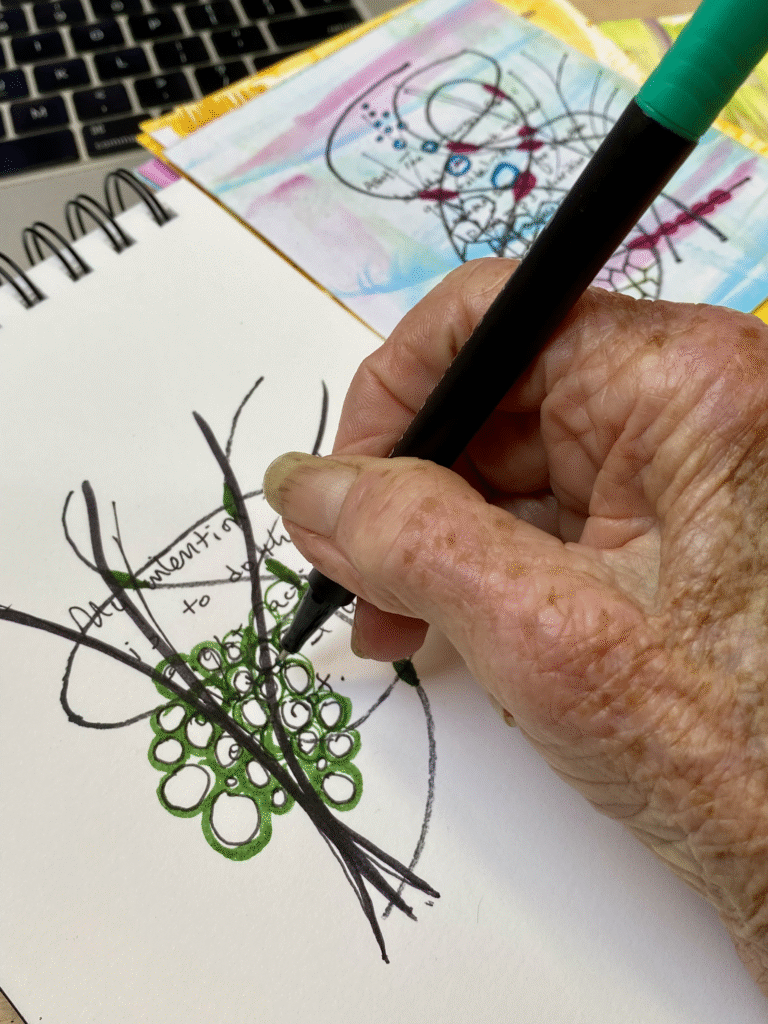
Neurographic art is a simple drawing method that combines flowing lines, shapes, and color to help calm your nervous system and shift stuck thoughts.
You draw loose lines across a page, round the corners where lines meet, then add more shapes or colors. It is almost like visual journaling. You do not need art skills at all.
This kind of drawing can:
- Soothe anxiety when Morning Pages feel too intense
- Give your mind a break from words
- Help you process big feelings that are hard to describe
It is a powerful companion for The Artist’s Way, especially in the emotional middle weeks. If you want a clear starting point, you can explore a beginner’s guide to neurographic art techniques on mindsketchlab.com.
Today I write my daily intentions using, draw some curvy lines, and add color for my morning practice. This sets me up to keep in mind what is important for the day.
The Power of Community – Feeling Less Alone as You Work Through The Artist’s Way
A gentle group can be the difference between stopping at week 5 and finishing the journey.
Supportive community offers:
- Regular check-ins that keep the book open
- Shared wins, like “I did my first Artist Date in months”
- Honest stories about resistance, which make your own struggles feel normal
- Ideas for kinder ways to work with the tools
In The Artist’s Way Reimagined™, group time is not about judging who did the most tasks. It is about staying present with your creative life together, even when it feels messy. It is about wanting to do the happy dance when others speak of their successes
Introducing The Artist’s Way Reimagined™ from Mindsketch Lab
The Artist’s Way Reimagined™ from Mindsketch Lab is built for people like you, who care deeply about their creative life and have a history of starting and stopping things, or are just too shy to communicate with others.
It focuses on three key benefits:
- A slower, kinder pace that respects real life. You take more time with each chapter, so you do not burn out or drown in guilt.
- Guided neurographic art sessions that help move through resistance when talking or writing is not enough.
- A warm community that replaces isolation and shame with support and shared language.
These are not extra features. They are direct workarounds for the main reasons people quit halfway through The Artist’s Way. These honor Julie Cameron’s work.
If you feel the pull to try again and want help staying with the process, you can explore The Artist’s Way Reimagined™ using this interactive bot I made to answer all your questions. Talk to the bot as you would a bff.
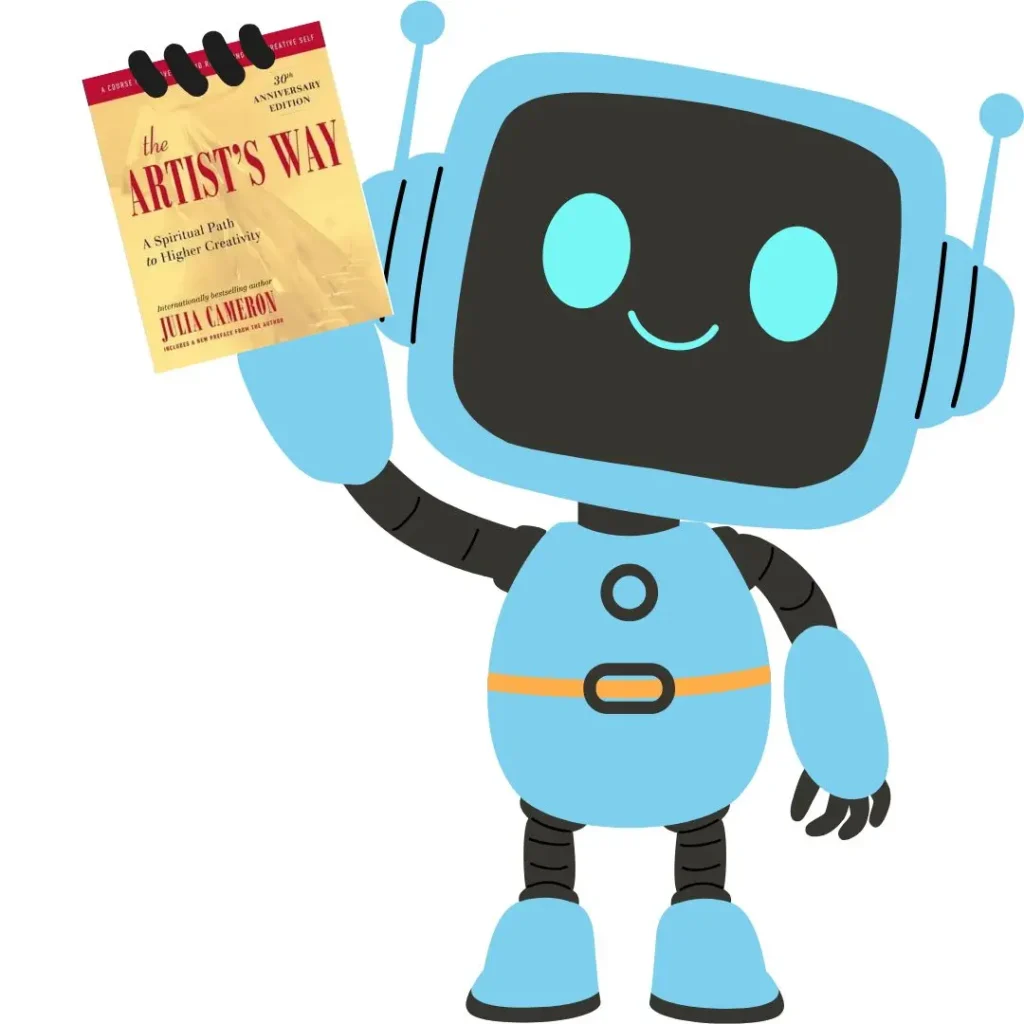
The Artist’s Way Reimagined Bot shows you how
The Artist’s Way book and our
community can help you.
- Loosen old blocks you may not realize you’re carrying
- Quiet your inner critic
- Build confidence and rebuild trust
- Clarify what you do want
- Stop circling and start moving forward
- See all the possibilities!
How to Start (or Restart) The Artist’s Way With Self-Compassion Today
You do not have to wait for the perfect season of life to start again. You can begin quietly, with one small step.
Choose Your Version of The Artist’s Way Journey
First, decide what kind of support you want:
- Solo with your journal and the book
- A small peer group or buddy you text once a week
- A guided program like The Artist’s Way Reimagined™
Then write down your reason for doing this now. Keep it short, like:
- “I want to feel playful again.”
- “I miss writing.”
- “I am tired of talking myself out of ideas.”
- “I’m in a rut and need chanhe!”
This sentence can be your North Star when motivation dips.
Make a Gentle Plan for the First Two Weeks
Keep your starting plan small and human:
- Pick a simple Morning Pages rhythm. Maybe 1 to 3 pages most mornings.
- Choose one easy Artist Date that feels low pressure, like a library visit or walk with a camera.
- Decide how you will track progress, such as a tiny check mark in your calendar for each day you show up.
Also plan for what you will do when (not if) you miss days. You might tell yourself: “When I skip, I will just start again tomorrow without making it a big story.”
Self-compassion, not strict discipline, will carry you through.
You now know what The Artist’s Way is, why Morning Pages and Artist Dates matter, where the 12-week journey often feels rough, and why many people quit around the middle. You have also seen how slower pacing, neurographic art, and community support, such as in The Artist’s Way Reimagined™ from Mindsketch Lab, can help you finish in a kinder way.
Your next step does not need to be big. Write one page. Plan one tiny Artist Date. Or explore support options that help you feel less alone.
You are allowed to do this at a human pace, with a soft heart, one small action at a time.
The Artist’s Way can support personal growth and creativity, but it isn’t meant to replace therapy, medical care or professional mental health support.
Key Take Aways
- The Artist’s Way is a 12-week creativity recovery process built on two core habits: Morning Pages and weekly Artist Dates.
- The “hard middle” (often Weeks 4–8) is common—and usually means the tools are working, not that you’re failing.
- You’re allowed to go slower than 12 weeks; a flexible pace often leads to better follow-through and less shame.
- Morning Pages aren’t “good writing”—they’re private mental decluttering that helps quiet the inner critic.
- Community, gentle structure, and low-pressure play can make it easier to finish (especially if you’ve quit before).
Frequently Asked Questions Answered
The Artist’s Way isn’t about becoming someone new. It’s about remembering what, or finding for the first time, what matters to you — one small, honest step at a time.
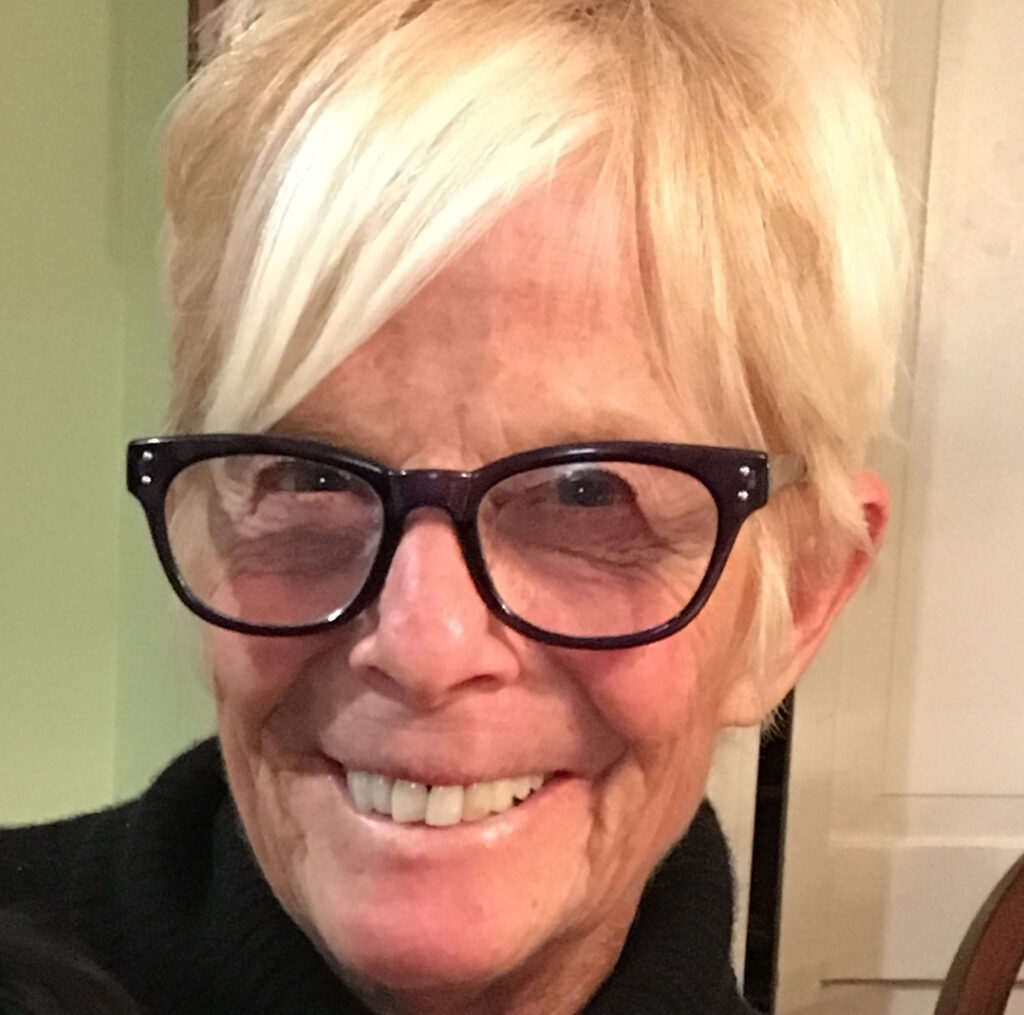
Marj Bates “I’ve spent nearly 40 years in addiction recovery, decades with The Artist’s Way, and teach The Artist’s Way Reimagined™, a slower, more supported way to work through Julia Cameron’s book The Artist’s Way – blending creative recovery tools, neurographic art, and community to help people move through resistance and stay with the process.
I’ve also changed careers later in life than most people would dare — proof that it’s never too late to begin again.”
MindSketch Lab