The Artist’s Way Introduction Overview | What the Book Is (and Isn’t)

This Artist’s Way introduction overview explains what the book is and isn’t, based on my 30 years of lived experience working with Julia Cameron’s process.
If you’ve tried The Artist’s Way before and quit early, join the club! Many buy the book, glance at it and put the book on a shelf. The key to the book is right up front – the introduction. Julia cameron sets the tone, explains the “why,” and tells you what to expect when resistance shows up.
Maybe you are new to The Artist’s Way or returning after quitting early, you may want to start with my full beginner guide here:
What Is The Artist’s Way? A Simple Guide for Beginners and Re-Beginners
Do you need to believe in God to do the Artist’s Way?
Julia Cameron describes The Artist’s Way as a “spiritual path to creativity” on her official website.
The Artist’s Way book by Julia Cameron – is ‘A Spiritual Path to Creativity’.
You do not need to believe in God or any higher power to benefit from The Artist’s Way.
Why the introduction to The Artist’s Way matters
Do not gloss over the introduction and skip to chapter one. The introduction is where you learn what The Artist’s Way is asking of you, what it means by creativity, and why the process can feel both exciting and uncomfortable.
What The Artist’s Way is really trying to do
The goal isn’t to turn you into a different person overnight. It’s to help you open back up to the creative part of you that’s already there, even if you’ve been telling yourself it’s “not you.”
Why Julia Cameron Uses “God” Language in The Artist’s Way (and How to Interpret It)
Julia Cameron talks about a “Great Creator,” and sometimes she uses the word God. That can be a deal-breaker for some readers, but her point is simpler than it sounds. She isn’t trying to push beliefs on you. Her message is basically: keep your mind open.
If the word “God” doesn’t work for you
She even gives you an out. If you get stuck on the word, you can:
- Make up a different name that feels okay to you
- Gloss over the word and keep reading
- Focus on the practices, not the label
No beliefs required
This was almost a deal breaker for me when I first opened the book 30 years ago. Before I tossed the book I scanned through it. I loved what I saw.
I decided to try the process and ignore the spiritual talk. Best move I ever made! Did the book convert me? No! The book changed my life and my beliefs are just that – my beliefs, not Julia Cameron’s or anyone else’s.
Is everyone creative? One of the Artist’s Way core beliefs says ‘yes’
A core idea in The Artist’s Way is that creativity isn’t reserved for “artists.” You’re creative by nature, but you may have trained yourself to ignore it.
Here’s what that often looks like:
- You say you aren’t creative
- You stop trying creative things
- You assume creativity is for other people
That belief becomes a habit, and the book is meant to interrupt it.
The “I’m not creative” myth
When you think you can’t create, you don’t try, you don’t take risks. You don’t start. You don’t play. An open mind matters because it gives you permission to try something. You don’t know if you are or not good at something until you try.
I am so glad I tried to melt glass! Driving a truck for a living was getting old. That is where I was at when I first opened The Artist’s Way book. I am now winding down a thirty year career as a Venetian Glass artist. BTW, I was not good at this when I first tried!
What can happen when you actually stick with it

When you commit to the tools, the results can be surprising. I have been in many many Artist’s Way groups. Each time at least one or two members start a magical new direction! My friend KT gave up her 9-5 at a big hospital and took her love of animals and started an animal pharmacy.
KP was working in a department store for very little pay – she converted her home’s garage into a yoga studio! Cathy wrote and published her first book. She is now selling a made for TV series. This list goes on…
These are the changes that come from an open mind. Stay open and follow what pulls at you.
Where that kind of shift comes from
The shift can feel like it came out of nowhere, but it usually comes from giving yourself room to listen and respond instead of shutting ideas down on sight.
Synchronicity: the sign you’re paying attention
Synchronicity isn’t the same thing as curiosity. It’s not just noticing something interesting. It’s when life lines up in a way that feels almost too timed to be random.
A classic example: you think about a friend you haven’t seen in 20 years, then later you go to the post office and there she is in line right in front of you.
That’s synchronicity. Pay attention to it. When you start showing up for your creative life, you start noticing that helpful people suddenly appear, unexpected invitations come, and then, because it’s too hard to ignore, a clear path is laid out for you
The Artist’s Way Reimagined
The Artist’s Way Reimagined™ is a less rigid way to move through Julia Cameron’s book.
We honor the content and the wisdom — and we adapt the pace to real life.
- We slow things down.
- We add Neurographic Art when resistance hits.
- We add community.
Why?
Because most people quit when resistance shows up (and it almost always does).
Because one week is often not enough time to truly work a chapter.
And because the number one reason people don’t reach their goals is trying to do it alone.
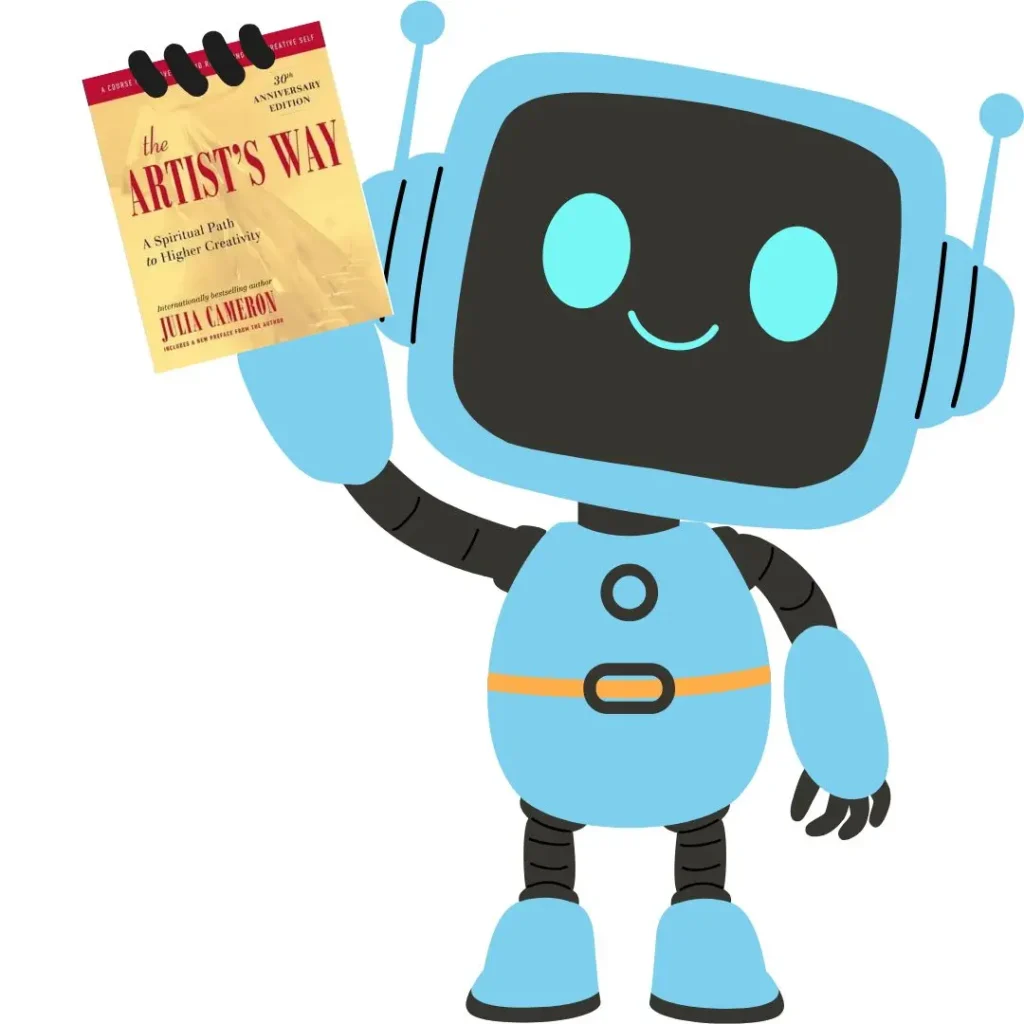
The Artist’s Way Reimagined Bot shows you how
The Artist’s Way book and our
community can help you.
- Loosen old blocks you may not realize you’re carrying
- Quiet your inner critic
- Build confidence and rebuild trust
- Clarify what you do want
- Stop circling and start moving forward
- See all the possibilities!
The 10 basic principles (and the repeated theme)
In the introduction, Cameron lays out 10 basic principles, and in each one she uses the word creativity or creative. She’s setting a foundation: creativity isn’t a hobby you earn, it’s part of your nature.
Here are a few of the Basic Principles written in The Artist’s Way book:
- The refusal to be creative is self will and is counter to our true nature
- It’s safe to open ourselves up to greater creativity
- Creativity is the natural order of life
One principle that hits hard
“The refusal to be creative is self-will and is counter to our true nature.”
It’s blunt, but it frames the work as a return to yourself, not a self-improvement project.
The time commitment is real, and that’s a problem for many people
Cameron suggests setting aside 7 to 10 hours a week to go through the book. That’s tough now, and it was tough back then too, even in 1995 (before social media, websites everywhere, and phones buzzing nonstop).
When you’re already stretched thin
If you’re working two full-time jobs and trying to start something new, scraping together even an hour a day can feel impossible. Time is one of the first places resistance hides.
The Artist’s Way reimagined: slower pace, more room to absorb
One way to make the process doable is to stretch it out. Instead of one chapter per week, you spend one month per chapter. That gives you room to practice without rushing, and it makes it harder to use “I don’t have time” as the reason you stop.
This reimagined approach is also done in community, and it introduces neurographic art as another way to push through resistance.
Why a slower pace fits real life
In the 2020s, time pressure is real and we are constantly pulled in different directions. A month gives you space to actually live the tools, not just read about them.
The “birthing process” feeling
Cameron describes people going through the book as a “birthing process,” where you swing between intense elation and defensive skepticism. If you’ve ever felt excited one day and irritated the next, that’s part of it.
You get to choose your path again
Another theme in the introduction is autonomy. Many people end up on paths that were chosen for them, often without permission. The book pushes you to notice that, then choose differently.
Not dramatically. Not all at once, little by slow. Plant the seed and you will grow into the person you are meant to be.

What Are Morning Pages from the book The Artist’s Way (and Why They Work)
Cameron explains Morning Pages in detail, including what they are and are not. The practice is simple:
You write three pages longhand every morning, seven days a week, in a cheap spiral-bound notebook or a fancy smancy journal. It’s stream-of-consciousness writing. Nothing fancy.
You sit down, you write, and you keep going until you hit page three.
What resistance sounds like
You might hear yourself think:
- “I don’t know what to write.”
- “This is stupid.”
- “I hate doing Morning Pages.”
You write that too. The point is not quality. The point is showing up.
Meeting the Censor
Cameron calls that nasty inner voice “the Censor.” It’s the mosquito on your shoulder that says:
- “What are you, stupid?”
- “You can’t do that.”
- “Who do you think you are”?
Morning Pages are one way you learn to recognize that voice without obeying it.
What are Artist’s Dates and why people resist them
Artist Dates are a weekly commitment, two-plus hours where you take yourself somewhere to refill your well. The part people don’t like is simple and strict: you have to do it alone.
It’s meant to inspire you, not entertain everyone else.
How Artist Dates can shape your work
Going to places you’ve never been before can shake loose ideas you didn’t know you had. Over time, this kind of solo input can lead to real direction changes, even long careers.
It might be a luxurious walk in nature – unplugged. An unknown destination, a walk through the city, a museum, library, or browse through a bookstore.
This introduction overview is just one piece of the process. For a full breakdown of what The Artist’s Way is, who it’s for, and how the tools work together, see my complete beginner guide.
Key takeaways to start
You don’t need special supplies or a perfect schedule. You don’t need to spend money. You need a few basics.
- The Artist’s Way book
- A cheap spiral-bound notebook
- Pen
- Commitment
- An open mind
Julia Cameron’s book The Artist’s Way is an amazing book. If you’ve struggled with The Artist’s Way, don’t assume you failed. Start by rereading the introduction, because it tells you what the process will feel like and why you’ll resist it. Commit to Morning Pages, make room for Artist Dates, and watch for synchronicity as you go. The most important requirement is simple, stay open.
Frequently Asked Questions:
By taking one month to get through one chapter you may need a couple of hours a week or a half hour per day. You could trade scrolling time and create a whole new life! The more time you put into this the more you will get out of this.
Morning pages are simply a cheap notebook, and pen, a quiet, uninterrupted, comfy space where you will sit and write three messy pages a day. Penmanship, grammar, and punctuation are to be ignored. This is a brain dump and no one will ever see this.
An artist’s date is to open your eyes, inspire you, to break your routine – take yourself to a special place, alone for a couple hours. Soak in the environment. Inspire Yourself.
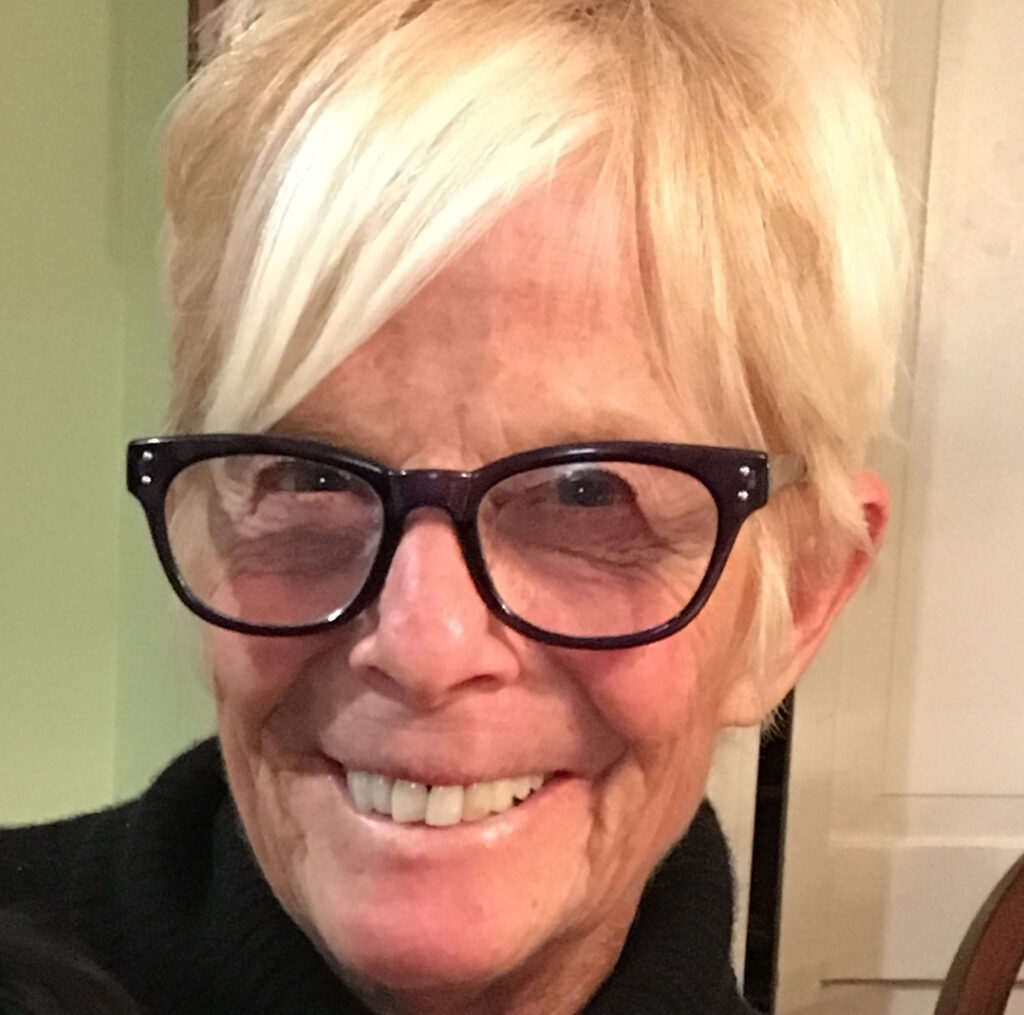
Marj Bates “I’ve spent nearly 40 years in addiction recovery, decades with The Artist’s Way, and teach The Artist’s Way Reimagined™, a slower, more supported way to work through Julia Cameron’s book The Artist’s Way – blending creative recovery tools, neurographic art, and community to help people move through resistance and stay with the process.
I’ve also changed careers later in life than most people would dare — proof that it’s never too late to begin again.”
MindSketch Lab