Calm Your Exploding Head With Neurographic Art (In 10 Minutes)
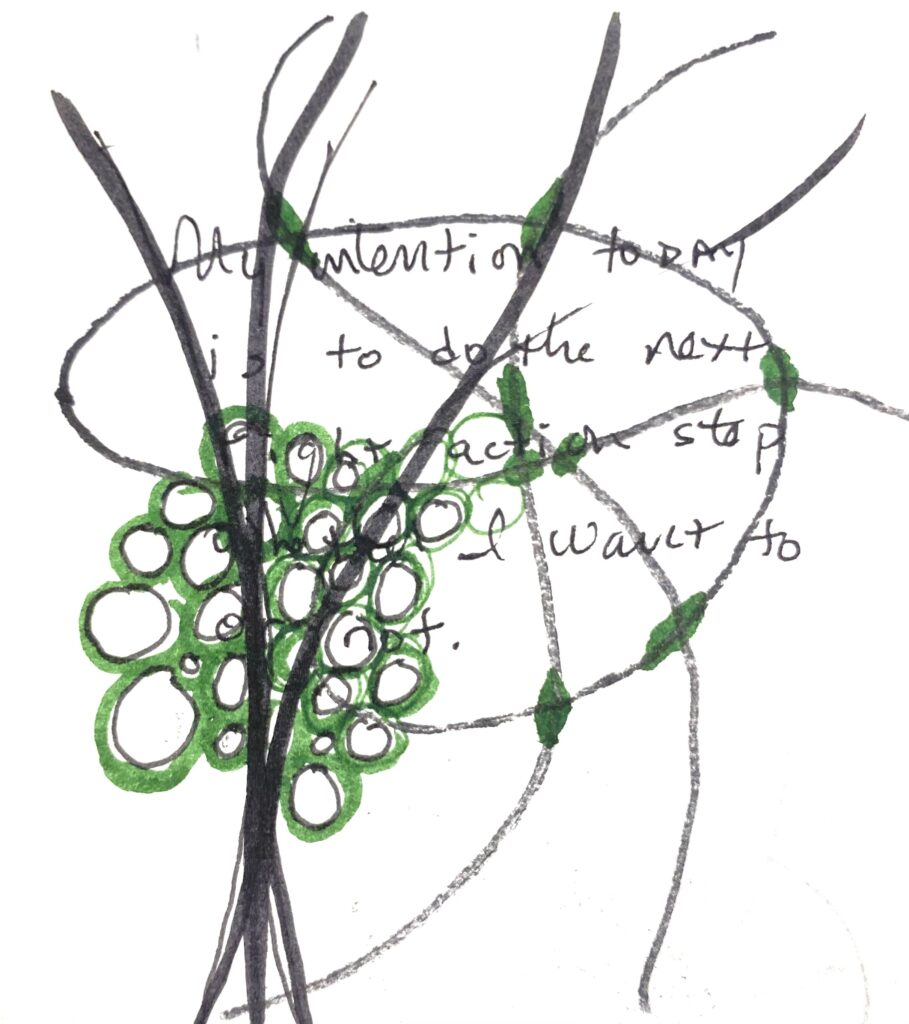
This simple 10-minute neurographic art method interrupts fight-or-flight and will calm your exploding head with Neurographic Art. Quickly bring your mind and body back to calm.
Who this helps: Anyone whose brain is spiraling, nerves are fried, or head is about to explode — and who needs a fast, kind reset before they snap.
If your head feels like it may explode, you are not alone. The world is loud and shaky right now. Add personal problems, holiday pressure, money worries, inflation, and all the other spinning plates, and it is no wonder so many people feel overwhelmed and distracted.
When you get yanked from calm to chaos, you need a simple technique, fast and kind, to reduce stress and anxiety by handling overwhelming feelings and pull you back.
That is where Neurographic Art comes in as a surprisingly powerful reset. Neurographic Art, a calming creative art form.
I find myself getting way more irritable lately when nothing is wrong. Is it any wonder, with the state of the world and the political climate in the USA, I would feel more agitated these days?
Here is my an article I wrote that speaks to irritability “Why Do I Feel So Irritable Lately When My Life Looks Fine”
Key Takeaways From This Exercise
- Neurographic art calms your nervous system in about 10 minutes.
- The looping-line method interrupts fight-or-flight quickly.
- Three simple circles help separate feelings from facts.
- One small next step can prevent an emotional spiral.
⭐ 10-Minute Neurographic Reset (Quick Steps)
Use this anytime your mind is spinning and you need to interrupt fight-or-flight.
1) Pick Your Desired Feeling (30 seconds)
Choose one word: calm, clear, steady, grounded.
2) Draw One Looping Line (1 minute)
Make a long, wandering line with 5–7 loops.
Round all the intersections.
3) Draw Three Circles (2 minutes)
Label them:
- Me
- The Situation
- The Other Person/Thing
4) Fill the “Me” Circle (2–3 minutes)
Write briefly:
- What do I feel?
- What do I need?
5) Clarify the Situation Circle (2 minutes)
Write:
- What facts are true?
- What assumptions am I making?
6) Spot the Pattern (1 minute)
Name the repeated behavior or trigger.
7) Choose One Next Step (30 seconds)
Something small like “wait before replying.”
⏱ Total time: ~10 minutes
Why this works: Neurographic art shifts your brain out of fight-or-flight by giving your nervous system rhythmic, low-pressure movement. The circles and questions help your mind separate facts from assumptions so clarity can return.
So many of the thoughts in our head are pure assumptions — stories we invent without any real proof.
You’ve probably heard the old line about “assuming” making an ass out of u and me. It’s funny because it’s true: most of our emotional spirals come from things we think are happening, not things that actually are.
The Sudden Anger Trigger
You are going along, your day is fine, and then boom. A comment from a family member, a text from a friend, or a sudden situation hits you and you go from 0 to 60 in a split second.
Your heart starts pounding. Your thoughts spin. You feel like you might explode at someone or shut down completely.
Feeling Powerless and Wanting to Pounce
In that moment you may feel powerless and all you want to do is react. Snap back. Fire off the message. March into the room and let them have it. At this point I say out loud ‘Stop’.
You know it rarely helps, but emotional processing is incredibly difficult once your system has flipped into attack mode.
Why You Can’t Think in Fight-or-Flight
When this happens, your sympathetic nervous system jumps into fight-or-flight. Your body acts like you are in danger, even when the threat is a difficult email or an argument.
In that state:
- Your heart pounds.
- Clear thinking shuts down.
- You have to calm down before you can find any real clarity.
Spotting It in Real Time
The key is catching yourself in the moment. I can’t stand that sudden rush of rage, hurt, or panic — it hits in a nanosecond and feels like a runaway train. So I literally make myself stop.
When your mind starts racing, tell yourself to pay attention instead of piling on more thoughts. Pause, breathe, and gather the facts before you do something you’ll regret.
That is when this quick neurographic art exercise, a meditative drawing practice, can calm your mind, improve focus and concentration, and change the rest of your day.
Try The Soft Landing Kit To Break The Spin

The Soft Landing Kit
A free 7-day reset for overloaded minds
What you’ll get:
For anyone feeling heavy, scattered or emotionally full – this kit helps you stay grounded in spite of the stress!!
This is a free 7 day reset offering you quick and easy writing and drawing prompts. The idea is simple: shift your brain from spinning thoughts into gentle, repetitive drawing, and then add a bit of structured reflection.
Step 1: Pick Your Desired Feeling
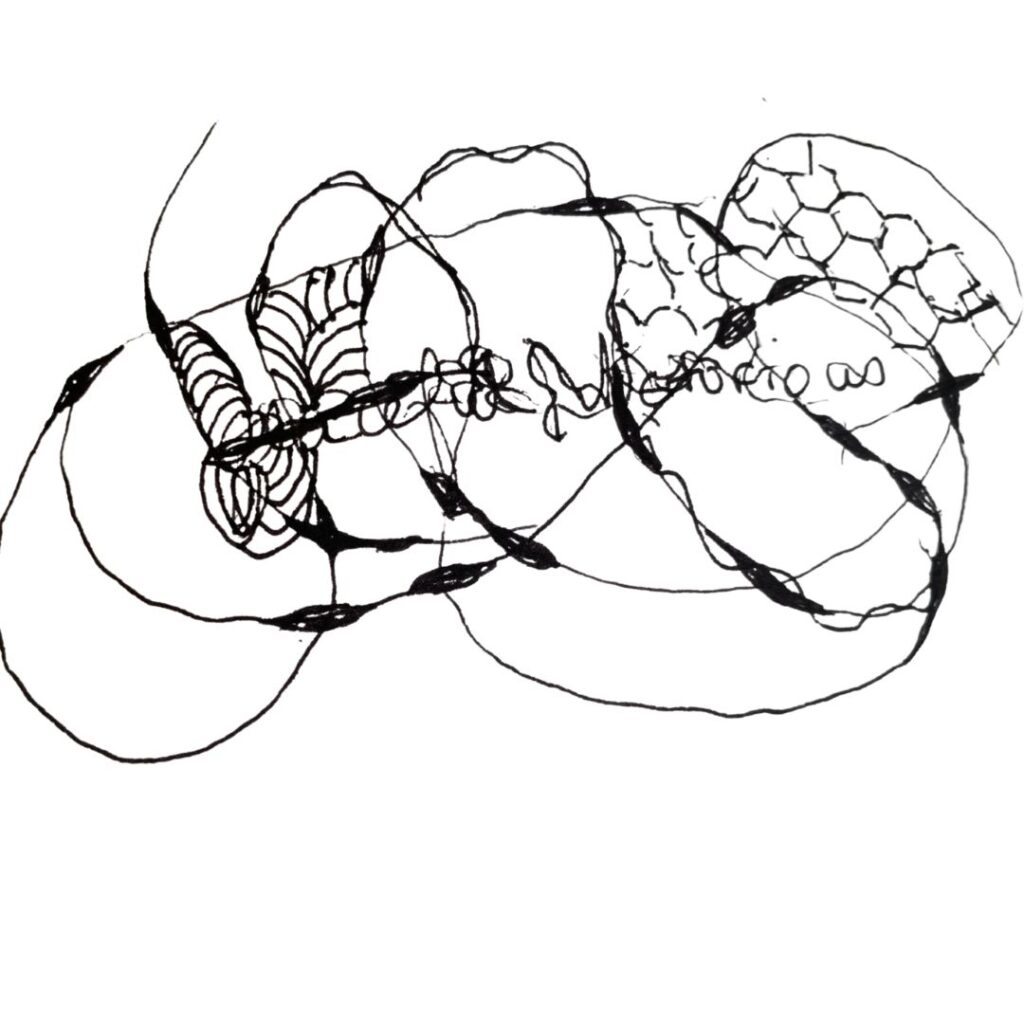
First, ask yourself: how do you want to feel on the other side of this mess? Choose one word, like “calm,” “clear,” or “steady.” Write that word down.
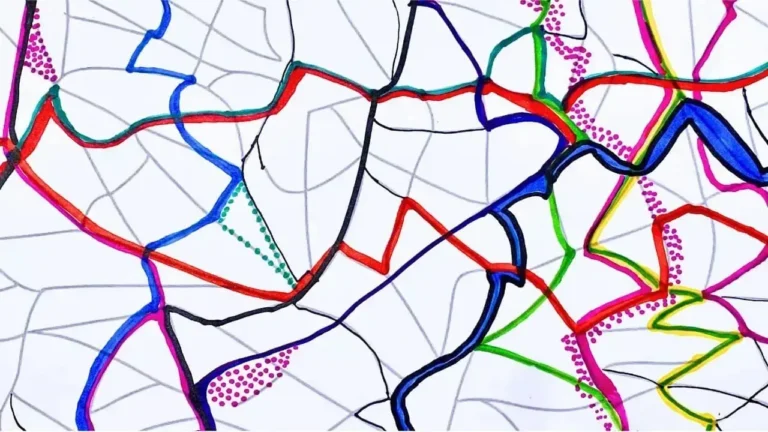
Then, using a felt tip pen or marker, draw one long, curvy line across the page. Let it loop five to seven times by drawing lines that wander wherever your hand wants to go. After that, follow the Neurographic algorithm by rounding corners where the lines cross with your pen.
Within two minutes, you may notice your breath slowing and your chest loosening. I do. Your brain starts to believe this calmer path is possible.
Step 2: Draw Three Simple Shapes
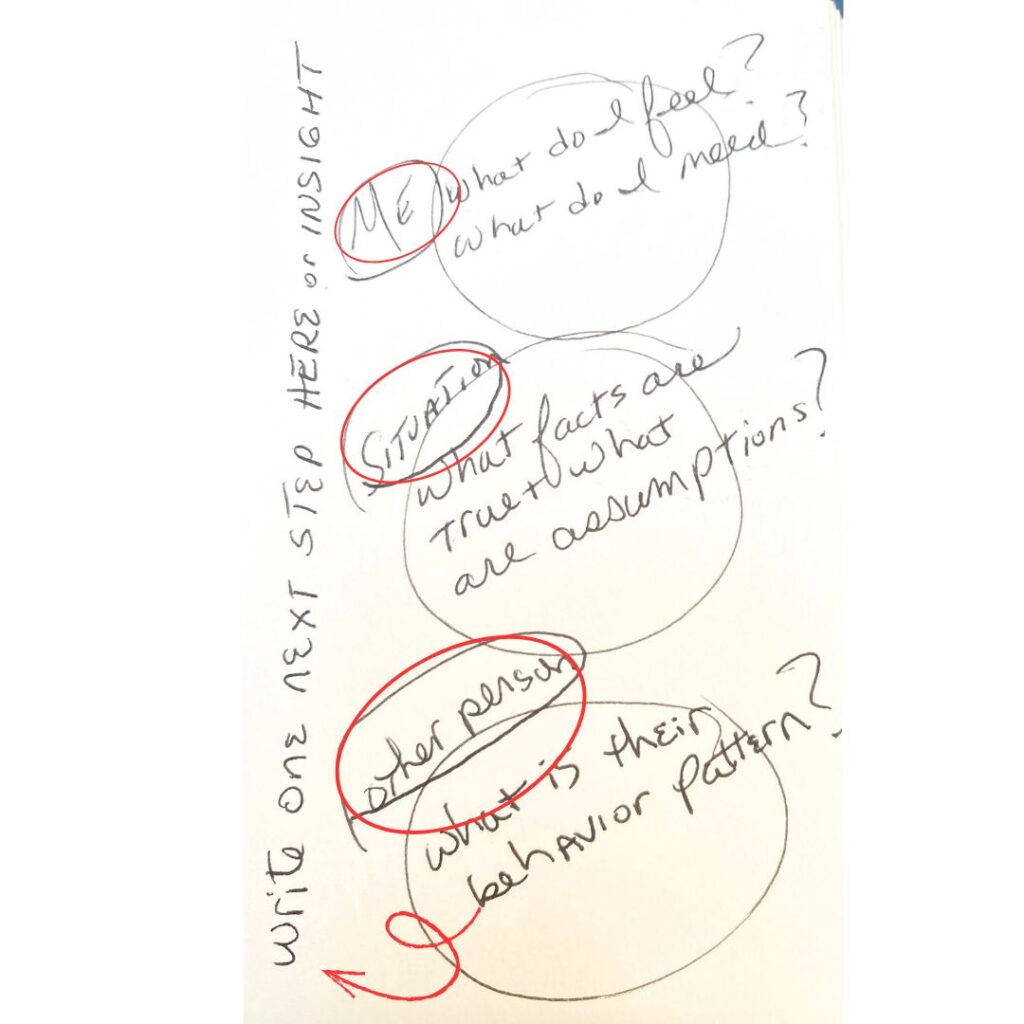
Next, grab another sheet of paper or flip the one you have. Scrap paper is perfect too. Draw three simple shapes, such as circles which are examples of organic forms and shapes, and keep them roomy enough to write inside.
Label them:
- Me (you)
- The situation
- The other person, place, or thing
Filling The “Me” Circle
Inside the “Me” circle, answer two questions in very few words:
- What do I feel?
- What do I need?
Do not write a full story. Just a few honest words will do. This part can take about three minutes.
Sorting Out The Situation Circle
In the “Situation” circle, analyzing facts versus assumptions as part of the problem solving aspect of this exercise leads you to ask yourself two more questions:
- What facts are true?
- What are assumptions I am making?
You may notice that much of the drama, fueled by conscious and unconscious assumptions, lives in your head.
That line about “99% is just in our head” often feels uncomfortably accurate once you map the situation on paper, gaining clarity through visual thinking.
The Other Circle: Spotting Patterns
In the third circle, jot down the behavior pattern of the person or situation. Maybe they are often late, defensive, vague, or critical. Keep it simple and do not overthink it.
You are not judging them as a whole person, you are just naming the pattern that keeps triggering you.
Wrap It Up With One Clear Action
To finish, write down anywhere on the page one next step you can take or one insight you just got from this little map.
Maybe it is “wait an hour before replying” or “ask a direct question instead of guessing.” The whole episode that could have wrecked your day can be over in about 10 minutes.
You do not have to show this to anyone. Your notes can stay private.
Why This Neurographic Art Exercise Works
This therapeutic art form of Neurographic Art, interrupts the fight-or-flight loop and helps regulate your nervous system. The drawing and simple questions in this effective creative activity give your brain a new script and it gently rewires the crazy.
⭐ About the Author
I teach creative emotional regulation tools, including Neurographic Art and the Artist’s Way, and use this method personally to manage stress and overwhelm. My work focuses on practical, fast techniques that help people return to clarity and calm.
⭐ Limitations & Safety Note
Neurographic Art is a helpful self-regulation tool, but it isn’t a replacement for therapy, crisis support, or medical care. If your stress or overwhelm feels unmanageable, please reach out to a licensed professional or trusted provider.
NAMI supports a nation-wide toll-free hotline that can adequately respond to people experiencing mental health crises.
National Hotline For Mental Health Crises
Dr. Jim Doty’s Simple View Of Emotions
The late Dr. Jim Doty, a neurosurgeon and neuroscientist, taught that most feelings boil down to two core emotions: love and fear. When you imagine a good outcome, your brain responds as if it is already real.
That means this exercise is more than a mindset trick. You are creating a small physiological shift every time you do it. This powerful exercise is useful for students and classroom environments due to its speed and regulatory effect.
Over time, repeated practice can build new neural pathways through neuroplasticity and neural connections.
What Is Neuroplasticity?
Harvard Health Publishing of Harvard Medical School writes Neuroplasticity refers to the brain’s ability to change and adapt throughout life by modifying its structure, functions, or neural pathways.
You Can’t Logic Your Way Out
When your system is flooded, you cannot argue yourself back to calm. You probably do not want to fight or run, yet you feel hijacked.
This is your chance to nip it in the bud, pick up a pen, and buy back your power.
Neurographic art was originally developed by Pavel Piskarev.
When I began combining simple words with curvy lines, I discovered an effective way to blend psychological techniques with creativity.
This MindSketch Lab™ approach turns drawing and reflection into a quick, abstract process that helps you regain clarity and power.
When you are overloaded your brain needs a different kind of input.
⭐ More Ways to Calm Your Mind
- Neurographic Art for Strategic Clarity
- Neurographic Art Speeds Decision Making
- Reduce Stress with Neurographic Art
Frequently Asked Questions
Try Neurographic Art The Next Time Your Head Feels Ready To Explode
Here’s how to use this technique when you’re in the middle of a spiral:
Next time your head starts spinning, grab a pen and any scrap of paper, even the back of an envelope. Embrace this free-flowing method for immediate emotional regulation. Write a word, draw a curvy looping line, draw the three circles, answer the questions, and choose one small step.
Add color if you want. Keep it simple or make it playful — there are no rules here. Some days you’ll have more time than others, and that’s fine. Leave it and come back later if you’re aiming for something pretty. Just remember: this is an exercise in rewiring your brain, not making museum-worthy art.
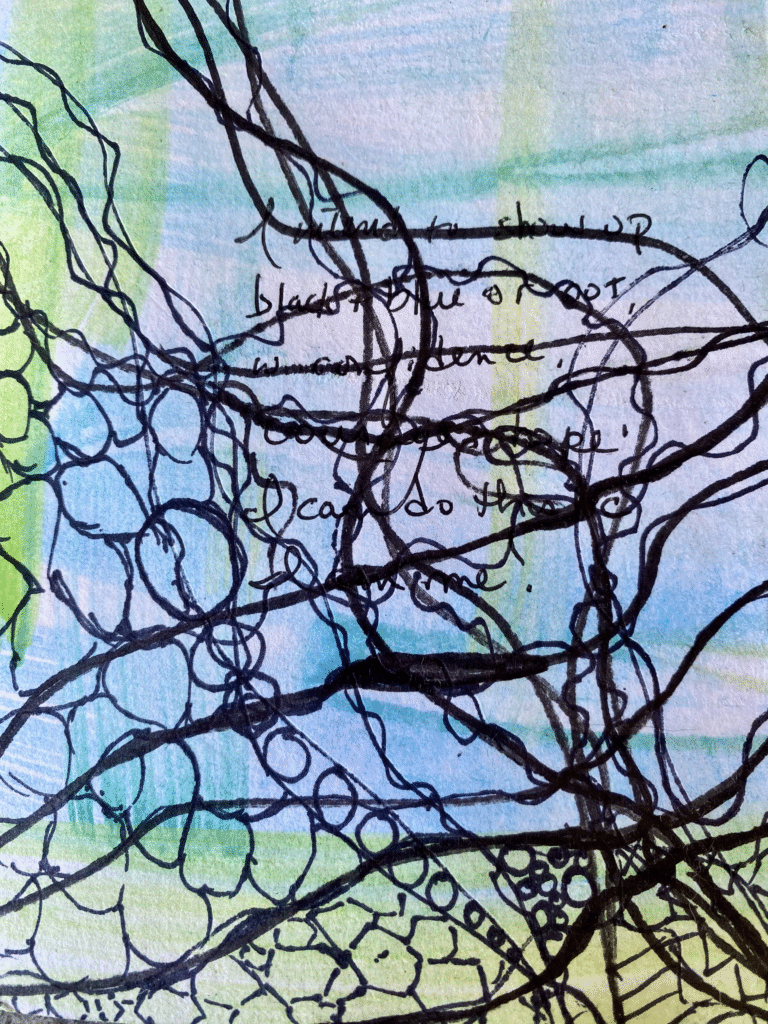
Notice how your body feels at the end. If this helps, share your experience, and watch for the freebie linked below so you can keep this exercise handy. When you can calm your system with a few lines and words, neurographic art becomes a quiet, practical way to save your day.

Marj Bates “I’ve spent nearly 40 years in addiction recovery, decades with The Artist’s Way, and teach The Artist’s Way Reimagined™, a slower, more supported way to work through Julia Cameron’s book The Artist’s Way – blending creative recovery tools, neurographic art, and community to help people move through resistance and stay with the process.
I’ve also changed careers later in life than most people would dare — proof that it’s never too late to begin again.”
MindSketch Lab