How to Focus | 5 Tools to Clear Your Head Fast

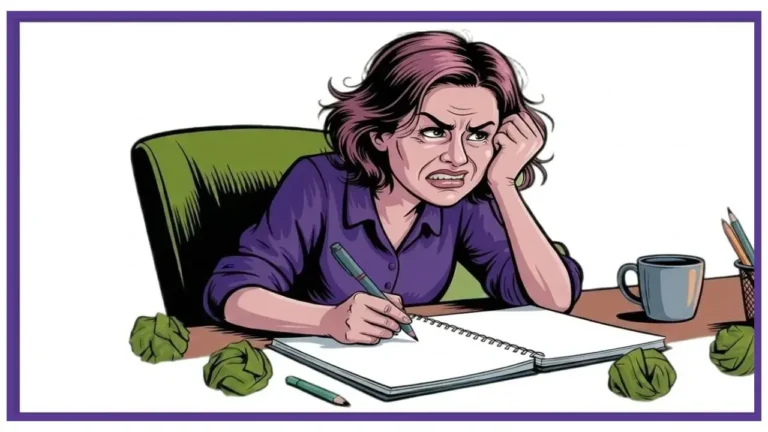
How to focus was one of the hardest parts of early recovery. My mind was loud, chaotic, and everywhere at once. It took a lot of practice to tame the distractions.
Table of Contents
- The 60-Second Reset
- One-Minute Brain Dump
- The Focus Anchor
- Touch One Thing
- The “Not Mine” Check-In
- Learning to Focus
Finally though after spending a lot of time and forming a lot of repetitive habits I came to be boss of my head.
When your mind is racing and everything feels urgent, focusing on anything can feel impossible. You can’t plan, you can’t decide, and you definitely can’t finish that thing you meant to start three hours ago.
These tools that will work right now can be used as long-term mindset shifts if you just make these simple practices habits. Practice these habits so much that it becomes intuitive.
When you’re mentally scattered, emotionally overloaded, you need to get your brain to reset. Otherwise your distractions will make reaching your goals much more challenging.

I recently discovered one of the best ways to focus is to write or draw lines so I decided to try to combine these 2 things. Draw lines? Yes Neurographic Art Line Drawing is my new favorite thing! Well this and my new puppy!
I combine writing and line drawing every morning together in one neat little sketch pad. Sometimes I use just black ink sometimes I add shapes and colors. I love this so much I had to start a MindSketch Lab.
Create Your First Neurographic Art Step-by-Step for Beginners
If you are feeling overwhelmed, nervous, anxious and worried, which seems like a perfectly normal reaction to what is going on in the world these days, try my Soft Landing Kit I made for us.
I do a morning writing and/or drawing practice most days. I usually spend around 10 minutes on this. Sometimes more because the zen feeling is such a relief I don’t want to stop!
This is the gift that keeps on giving to me throughout my day because it clears my head – until the next time I listen to the news!

The Soft Landing Kit
A free 7-day reset for overloaded minds
What you’ll get:
For anyone feeling heavy, scattered or emotionally full – this kit helps you stay grounded in spite of the stress!!
Not a day goes by in my hectic life that I don’t use at least one of these 5 go-to tools I am going to show you now. I use lots of clarity tools a lot of the time. Hey! I know who I am and what I need to function efficiently.
The more efficient I am at work, the faster my work day goes and this allows me more time to play with my dogs, work on my fun creative projects and see my friends! Reseting my head is a practical tool.
The 60-Second Reset
One practice I do most days is wash any dishes that are in the sink after I feed the pups. Mind you I have a new dishwasher in the kitchen next to the sink. I do this to remind me multi tasking is a myth.
Here is a good sensory grounding tool you can use anywhere. When your brain is spinning, stand up and do this:

- Name 5 things you can see
- 4 things you can hear
- 3 things you can touch
- 2 things you can smell
- 1 thing you can taste or imagine tasting
When you are in the midst of chaos remember to focus on one or two of these quick mental resets and bring yourself back to the present. Focus starts with being present.
When, what seems like a lifetime ago, I used to let stress completely engulf me I would feel so wound up it was hard to sit still. I made it my habit during these times to look down and see where my feet were. I know, this sounds silly.
Knowing where my feet are bring me back to this present moment and in this moment I can use one of my tools to determine how important this latest round of stress is. I also ask myself if this will matter in a few years.
As I stand at the sink with wet hands I repeat silently repeat ‘this one thing I do’. This can be difficult for me if there are many dishes because I hate standing still!
One-Minute Brain Dump
Set a timer for one minute. Grab a pen and paper and write everything in your head. Don’t edit. Don’t think about punctuation, grammar, or neatness. Just empty the mental trash. This clears the noise so your actual thoughts can come through.

The Harvard Medical School Newsletter has more emotional regulation tips. The article speaks to mindfulnesses and more practical tips for self regulation.
A one minute brain dump is like a fast journaling or writing session. I try to do this each morning. When I started to do stream-of-consciousness writing 30 years ago I was taught to write 3 pages long hand every single morning.
I can hear you now saying ‘I don’t have time!’ Neither did I!
While working a miserable job full time and starting my new business I still made time to do this. Why? Because it worked! It taught me to focus on the things I can and cannot change, as well as learning who I was and wanted to be.
Everything in life is a trade-off. It was worth it to me to get up at 4:40 am, which was twenty minutes earlier than my usual 5 am wake-up time. Again, it worked! I saw the benefits almost immediately.
For journaling tips check out the article I wrote 7 Quick Tips for Journaling Your Way to Clutter-Free Living
The Focus Anchor
Choose one thought, one word, or one task – like my ‘this one thing I do’. Write it on a sticky note. Say it out loud. That’s your focus anchor. When your attention drifts (and it will), return to the anchor. It’s not about being perfect—it’s about redirecting your brain on purpose.

Touch One Thing
Pick something up. Wipe one surface. Take one sip of water. Do one physical action with your full attention. Movement breaks mental loops and reconnects you to the present. That’s where focus lives.
This is why I wash dishes! Did you ever think dish washing could be good for your mental health? It works for me!

The “Not Mine” Check-In
When your thoughts are heavy or loud, pause and ask: “Is this even mine?” Are you carrying stress that belongs to someone else? Are you trying to fix something that isn’t your responsibility? Letting go of what isn’t yours frees up mental bandwidth.

This tool reminds me of all the things we insert ourselves in that are none of our business.
I had a friend once tell me she was worried sick about me during a Nor’Easter storm. I understood the sentiment and it is nice to be thought of in this way. At the time I hoped she was exaggerating because it wasn’t her worry to carry.
Learning to Focus
I’ve learned how to focus when I need to—and how to let my mind wander when it’s time to create. Whatever’s bothering me, I start by clearing my head first. And you can too.
A rule I try to follow- if it doesn’t fit under my umbrella then it is none of my business. We are just finishing up a little contested local town election. I did what I could to help elect my candidate and then I let it go. By the way – she won!
These tools don’t require fancy journals or apps. They’re simple, fast, and effective in real life—when focus is hard and your brain won’t cooperate. If you are anything like me and the rest of us you will probably have to wait until your back is up against the wall to make changes.
If you would like to read more about Mental Decluttering check out Improve Your Focus With Mental Decluttering
Tuck these tools away so you will have access when you need them most! And when all else fails try washing your dishes!

Marj Bates “I’ve spent nearly 40 years in addiction recovery, decades with The Artist’s Way, and teach The Artist’s Way Reimagined™, a slower, more supported way to work through Julia Cameron’s book The Artist’s Way – blending creative recovery tools, neurographic art, and community to help people move through resistance and stay with the process.
I’ve also changed careers later in life than most people would dare — proof that it’s never too late to begin again.”
MindSketch Lab