Why Do I Feel So Irritable Lately When My Life Looks Fine?
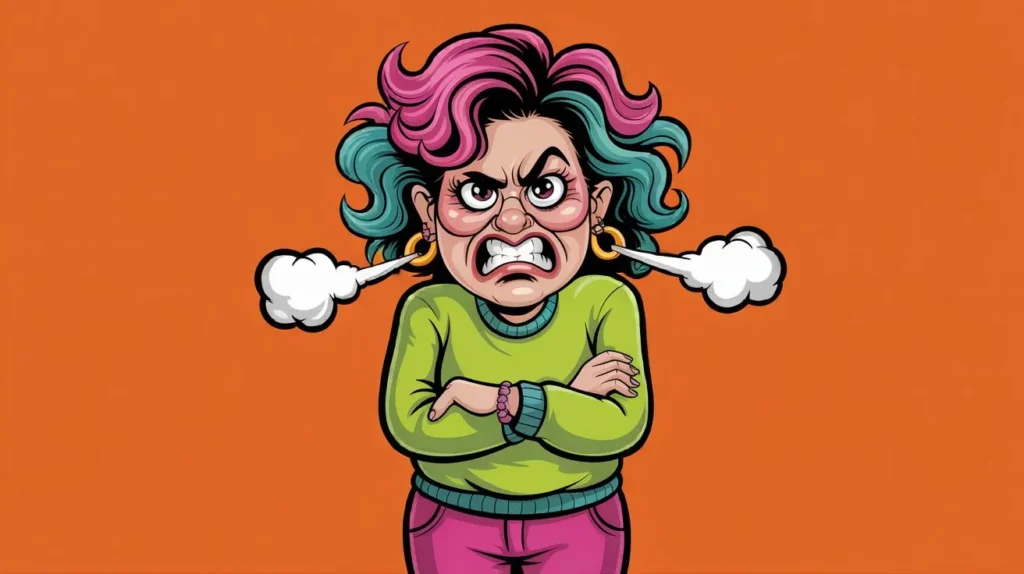
Why do I feel so irritable lately when my life looks fine? Feeling irritable when life seems fine is often caused by mental overload, constant distractions, emotions run amuk, or just feeling tired all the time.
Irritability often signals pressure building beneath the surface. Something is off.
My Irritibility Moment I Realized Something Was Off
That question hit me the other day when I snapped at my sweet puppy. The moment it happened, I knew my puppy wasn’t the real problem.
The strange thing about irritability is that the thing you snap at is almost never the real problem. Something deeper had been building for a while, and that tiny moment simply exposed it. My sweet puppy deserves better, especially when he is simply acting like a pup!
The Quiet Rise of Everyday Irritability
When I snapped at Tucker, I knew it was time to stop and figure out what was really going on. There have been times the puppy caused a big mess and it was hard for me to surpress my laughter as I tried to dish out discipline. So I knew it was not the dog’s behavior that prompted my outburst.
See if any of these feel familiar:
• snapping at someone you care about
• feeling annoyed by small interruptions
• impatience in traffic or lines
• reacting more strongly than the situation deserves
• feeling on edge most of the day
If this sounds like you – grab the 5 Minute Reset Guide!
The 5-Minute Irritability Reset Guide
Grab the free 5-Minute Irritability Reset Guide I made for myself if you’ve been feeling:
• irritable
• more impatient than usual
• letting small things getting under your skin
This free short guide can help you pause, reflect, and reveal what may really be going on beneath the surface.
Download the 5- Minute Irritability Reset Guide here
and try it for yourself. It’s free!
Most people assume these reactions are caused by whatever just happened. But more often, the moment is simply the spark that lights a pile of pressure that has been quietly building.
How Irritability Spreads Through the Day
Once irritability starts building, it rarely stays contained to one moment. It begins to show up throughout the day in small but noticeable ways.
You might notice things like:
• waking up already feeling tense, a little off
• over reacting to coworkers or family
• small inconveniences feeling bigger than they should
• replaying frustrating conversations in your head
• feeling like everyone around you is getting on your nerves
The confusing part is that nothing dramatic has happened.
Life may look perfectly fine on the outside. Yet inside, your patience feels thinner than it used to. If this sounds familiar, you might relate to Your Life Looks Fine, So Why Do You Feel Off?. Irritability rarely appears out of nowhere. It usually builds slowly.
The Nervous System Under Constant Pressure
Part of what’s happening has to do with how our nervous system works. The brain has two main systems managing stress.
Sympathetic
The sympathetic nervous system
activates our
fight-or-flight response.
Parasympathetic
The parasympathetic nervous system
allows the
body to rest and recover.
When life feels uncertain, stressful, or overwhelming, the sympathetic system stays activated longer than it should.
That means:
• faster emotional reactions
• a lower patience threshold
• stronger irritation responses
Small annoyances feel bigger because your system is already on edge. Your brain isn’t malfunctioning. It’s responding to pressure.
Once I realize this my awareness can work on getting me back to my parasympathetic nervous state. Simply put this means taking a quick break, a walk, just stepping outdoors and breathing, playing with the pups for giggles.
Attention Fatigue and Constant Distraction
Life today, compared to 30 years ago, constantly pulls our attention in different directions. Back then, most interruptions were fairly simple—perhaps a ringing telephone, a knock at the door, or the evening news on television.
Today is very different. Every notification, message, email, or news alert competes for our attention. Our phones buzz, screens flash, and information arrives nonstop. Each interruption pulls us away from what we were doing and forces our brain to shift gears.
Research suggests that after an interruption,
it can take around 23 minutes to fully return
to your original train of thought.
Consider how many interruptions you have in a typical day. Checking TikTok five times a day can cost you 115 minutes of focused time – that is almost 2 hours! I can’t afford this! Can you?
From a practical standpoint, that represents a significant loss of time. When you add in the hours many people spend mindlessly scrolling, it’s no wonder so many of us feel like we never have enough time.
- Emails
- Texts
- News alerts
- Social media
- Streaming distractions
- 24/7 buying options
Your brain is constantly resetting, and that would test the patience of almost anyone. This kind of mental fragmentation creates tension, and that tension often shows up as irritability.
Because of this, I check messages and emails only a couple of times a day. I also maintain a complete news blackout from the start of my workday until I finish, and I use social media sparingly and usually only when it relates to my business.
I spent many years living with constant distractions before deciding to make changes. The difference has been remarkable. I’m far more productive during the day, and it leaves me with more time to enjoy what matters most—like playing with my furry friends. 🐶
Here are some focusing tips! How to Focus | 5 Tools to Clear Your Head Fast
The Emotional Backlog Most People Carry
Another reason irritability builds is that many people are carrying emotional weight that never gets processed.
Things like:
• frustration about work
• disappointment about life direction
• resentment that never gets expressed
• grief that hasn’t been acknowledged
• desires that have been pushed aside
When those emotions have nowhere to go, they begin to accumulate. Eventually, they leak out sideways as irritation. Often the irritation isn’t really about the person or situation in front of you.
I think about the times when I’m in a rush and the printer suddenly runs out of ink, paper, or needs troubleshooting. In that moment I’m flustered, not thinking clearly, and immediately irritated. My first reaction is often, “Why does this always happen when I’m in a rush?”
Of course, it doesn’t always happen—and the truth is I’m rarely in that much of a rush unless my own planning has been a little off.
In those moments, the printer isn’t really the problem. It’s just the trigger. The irritation is coming from everything that has been quietly building underneath.
Routine Fatigue
Another quiet cause of irritability is routine fatigue.
Life slowly becomes:
- work
- chores
- errands
- screens
- sleep
Rinse and repeat.
We were not put on this earth simply to chop wood and carry water forever.
Some people truly don’t have spare time. But others underestimate how much time disappears into things like:
• endless streaming
• scrolling social media
• background television
• digital wandering
Those habits rarely restore energy. In fact, they often increase irritability because the brain is craving something different. Our minds need novelty and curiosity to stay emotionally balanced.
Thinking Without Movement
When something feels off in life, many people respond by thinking harder.
- They analyze
- Research
- Replay conversations
- Watch advice videos.
But thinking alone can easily become a trap.
I was taught years ago that if I’m stuck entirely in my own head, I’m in a bad neighborhood. It’s usually a sign that I need some movement—move a muscle, change a thought. Sometimes what helps most is a conversation with someone else or simply getting a different perspective.
Endless internal thinking exhausts the brain. And that kind of mental exhaustion often shows up in a familiar way: irritability.
When Curiosity Disappears
One of the mind’s natural pressure valves is curiosity. Curiosity expands life. Without it, life begins to shrink.
A few years ago, at an age many retire from work, I started a completely new career that pushed me into the humbling world of technology—something I had avoided most of my life. In the past, I only learned enough to complete whatever task was in front of me.
Learning technology has been frustrating at times, but it has also been surprisingly fun. I refuse to be constantly one-upped by my computer. 😄
Constant learning makes me feel alive. It reminds me that curiosity is one of the best ways to keep the mind engaged and energized. I’m lucky, I was born curious. Some of my curiosities lead me on great adventures and bring energy back into life!
Simple Ways to Reduce Irritability

If irritability is a signal, the next step is adjusting the conditions that create it.
A few small changes can make a surprising difference:
- Take short walks to reset your nervous system
- Reduce notifications and digital interruptions
- Write about unresolved frustrations rather than carrying them mentally
- Try learning something new each week
- Limit news and social media consumption during work hours
- Let go of resentments
- Visit with friends
None of these changes are dramatic. But small shifts in attention and routine can reduce a surprising amount of mental pressure.
For example, when there is little variation in your day-to-day activities, life can start to feel like you’re sleepwalking through it. Then you open Instagram and see what looks like glamorous lifestyles everywhere. It’s easy to start comparing that highlight reel to your own ordinary day.
That kind of comparison can irritate almost anyone. In fact, comparing yourself to others is a common trigger for irritability.
After all, people rarely post the messy parts of life—like arguments with their spouse about money or stressful days when nothing seems to go right. Social media usually shows the polished moments, not the real ones.
Irritability Is Often a Signal
Irritability, like anger, can actually be a useful signal. It tells you something in your life needs attention.
It might be:
• mental overload of other people’s stuff
• emotional backlog of unresolved issues
• routine fatigue
• suppressed curiosity
• unresolved decisions
• a lack of joy
Once you trace the root of the irritation, you have the opportunity to change something. And when something changes, energy begins to return. Even micro amounts of joy make a difference in a day
Instead of feeling trapped, you begin to feel alive again.

Another tool that helped me understand and release a lot of hidden irritation came from teaching The Artist’s Way for nearly three decades. Through that work, I’ve watched many people discover how much frustration they were quietly carrying without realizing it.
The practices in that program encourage reflection, creative solutions, and honest self-examination. Over time, they help people notice the small ways life, habits, and old thinking patterns can hold them back.
For me, teaching those ideas for so many years reinforced something important: much of the irritation we experience isn’t really about the moment in front of us. It often comes from unresolved pressures, neglected creativity, or parts of life we’ve been postponing.
Learning to notice those patterns—and gently letting some of them go—can free up a surprising amount of emotional energy. And when that pressure lifts, irritability often lifts with it. ✨
Frequently Asked Questions
Why do I feel irritable when nothing is wrong?
Irritability often comes from mental overload, emotional buildup, or constant distractions rather than a specific problem.
Why do small things suddenly annoy me?
When your nervous system is already under pressure, even small interruptions can trigger stronger reactions.
Is irritability a sign of stress?
Yes. Irritability is one of the most common emotional signs that your brain and nervous system are under strain.
Key Takeaways
• Irritability often builds slowly rather than appearing suddenly.
• Mental overload and constant distractions can reduce patience.
• Unprocessed emotions can leak out as frustration toward small things.
• Curiosity and novelty help restore emotional balance.
• Irritability is often a signal that something in life needs attention.
• Here’s some info about our online Artist’s Way group
The 5-Minute Irritability Reset Guide
Grab the free 5-Minute Irritability Reset Guide I made for myself if you’ve been feeling:
• irritable
• more impatient than usual
• letting small things getting under your skin
This free short guide can help you pause, reflect, and reveal what may really be going on beneath the surface.
Download the 5- Minute Irritability Reset Guide here
and try it for yourself. It’s free!

Marj Bates “I’ve spent nearly 40 years in addiction recovery, decades with The Artist’s Way, and teach The Artist’s Way Reimagined™, a slower, more supported way to work through Julia Cameron’s book The Artist’s Way – blending creative recovery tools, neurographic art, and community to help people move through resistance and stay with the process.
I’ve also changed careers later in life than most people would dare — proof that it’s never too late to begin again.”
MindSketch Lab