Neurographic Art vs Art Journaling for Stress Relief
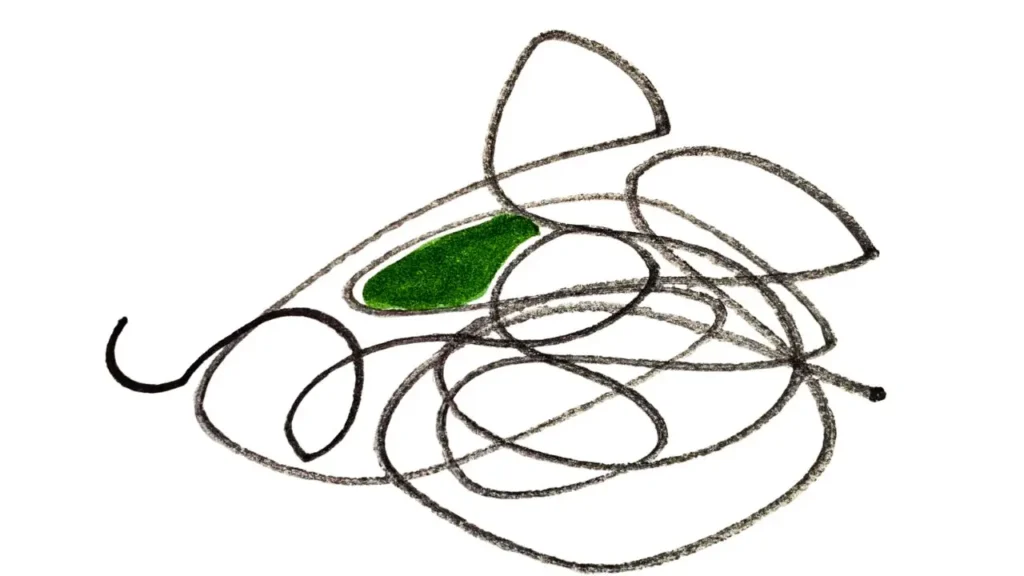
Neurographic art and art journaling are two creative ways to work through thoughts and emotions. In other words when my head is ready to explode I pick up a pen! Each method has its place, lately I have been combing writing and drawing.
- Neurographic art (line drawing) and journaling (writing) both reduce stress and boost clarity.
- Drawing lines helps when your thoughts race or you feel tense.
- Journaling works best for planning, organizing options, or finding your next step.
- A five-minute routine combining both methods is enough to reset your mind and make decisions.
- Consistency is more important than technique or talent.
When stress piles up, your brain gets noisy and your body gets tight. Neurographic art and art journaling can help fast, but they help in different ways.
One uses simple lines to settle your nervous system. The other uses quick, honest words to sort thoughts and feelings. You don’t need art skills for either one, and you don’t need the perfect notebook, markers, or mood to begin.
What matters most is showing up often. A messy five-minute practice will help more than a beautiful page you never start.
The Goal Is Not Making Pretty Art,
It Is To Get Back On Track.
Neurographic Art | Quick Calm for a Busy Brain
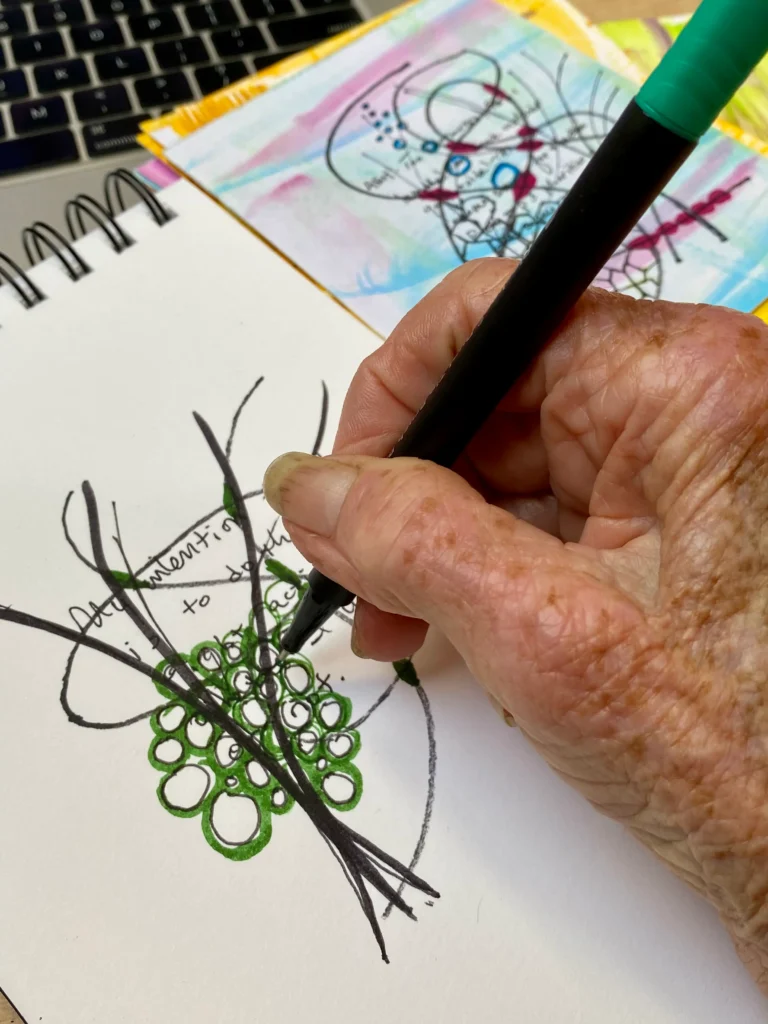
Neurographic art is simple. No artistic skills are necessary. Just stopping what I am doing that may be frustrating or distracting me and picking up a pen and sketch pad or journal calms me.
National Library of Medicine has published research on how creative activities like drawing and journaling support brain health and emotional regulation.
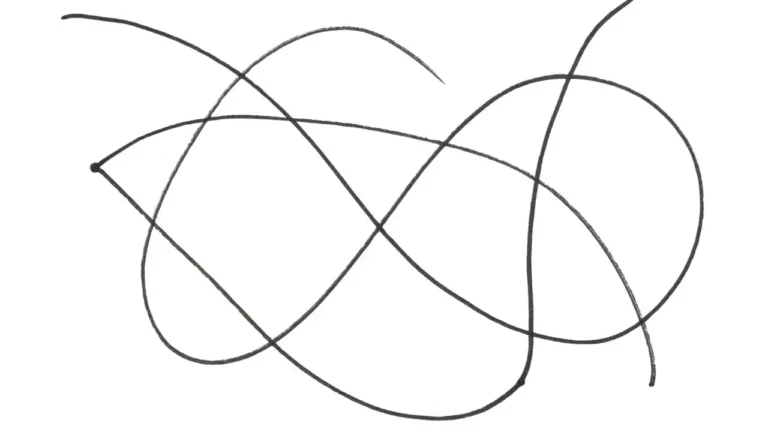
Try this – put a pen to paper with the idea of drawing a curvy line and let your line wander on the page.
Notice where the lines intersect, round the corners into smooth curves. This action reduces physical tension and tells your nervous system to relax. This is not woo- woo, hocus pocus. This is based on the neuroplasticity of our brains.
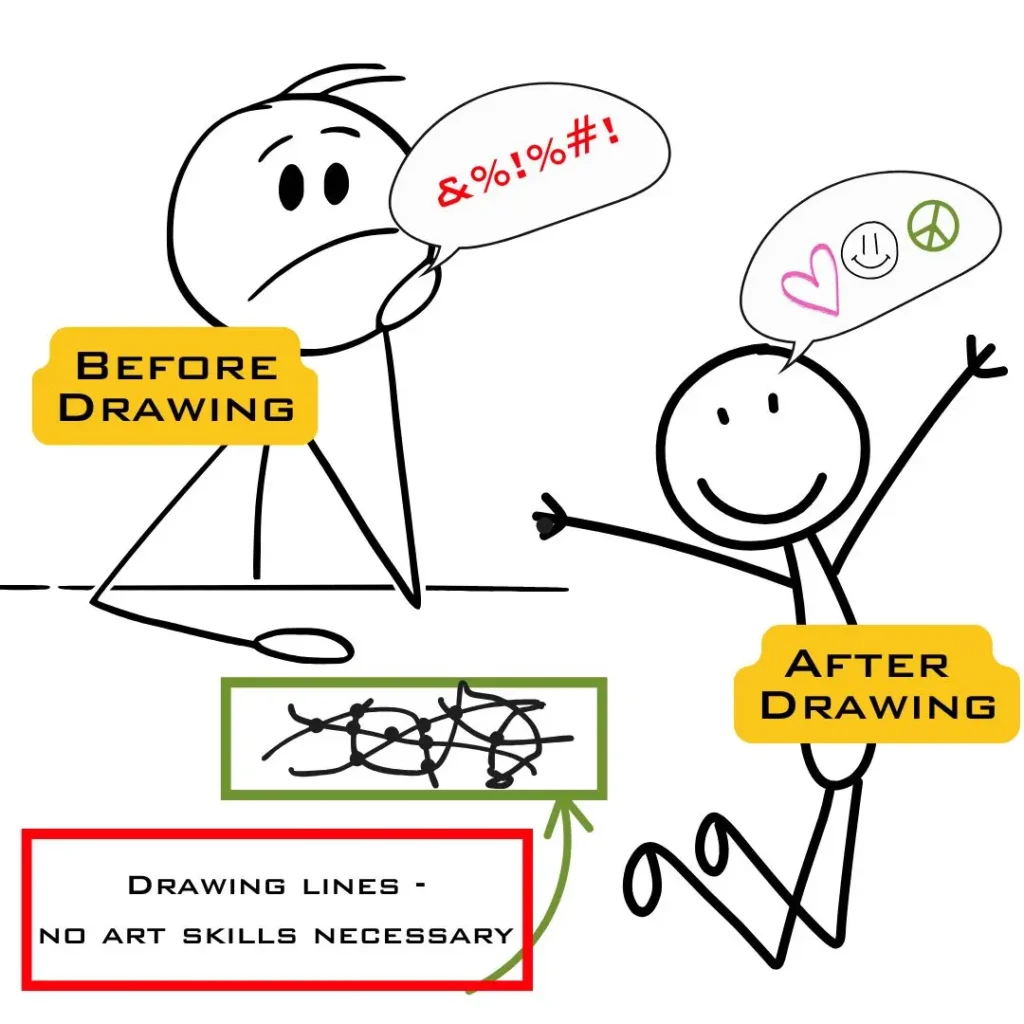
Best used for:
- Racing or looping thoughts
- Physical tension (jaw clenching, shoulder tightness)
- Overwhelm or decision fatigue
How to Do It (2 Minutes):
- Put pen to paper and draw a free curvy line, crossing it several times.
- Round each intersection to create smooth curves.
- Breathe out slowly as you draw.
I practice breathing 4-7-8. 4 breaths in, hold for 7 counts, and 8 counts out.
The American Heart Association has very good information about all aspects of breathing
Most people notice their breathing slows and muscles relax within two minutes.
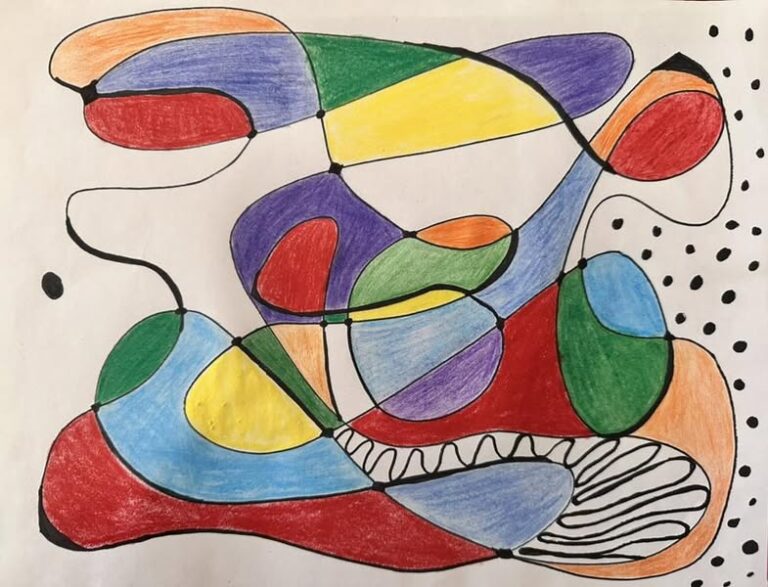
The goal isn’t pretty art. The goal is relief. If your jaw feels tight, your chest feels busy, or your mind keeps looping, this kind of drawing can help you settle before you try to fix anything.
Art journaling: a fast way to clear your head with words
Art journaling is a private place to put thoughts on paper before they tangle any further. Sometimes people add color, doodles, or collage, but words usually do most of the work. The writing can be neat or messy, full sentences or scraps.
This practice works well when your mind feels crowded, but your body doesn’t feel highly activated. You may not need calming as much as you need a clear next step. In that moment, writing can help you name the real problem, spot a pattern, or decide what matters first.
Grammar doesn’t matter. Neatness doesn’t matter. Honesty matters, even if the page looks rough.
How each method helps with stress, clarity, and decision making
The easiest way to compare these tools is by outcome. Neurographic art helps you regulate. Art journaling helps you organize.
When your body feels stressed, start with drawing
Start with drawing when stress feels physical. Maybe your shoulders are hard, your jaw is clenched, or your thoughts are moving too fast to catch. In that state, a blank page full of curving lines can feel easier than finding the right words.
The act of rounding sharp intersections matters. It slows your hand, keeps your eyes focused, and often creates a small shift in the body. You may notice a longer exhale, a looser grip, or less mental flooding after only a few minutes.
When your thoughts need organizing, start with writing
Start with writing when the problem is fog, not overload. A hard email, a work choice, or a week with too many tasks can leave you mentally jammed. Journaling helps because it turns a swirl into sentences.
Why combining both can work better than using just one
Some days you feel stressed and unsure at the same time. That’s when both methods work best together.
Draw first, then write. A few minutes of neurographic art can calm the body enough for clearer thinking. After that, journaling can turn that calmer state into a decision, a plan, or one next step.
Keep It Simple!
You do not have to buy a bunch of art supplies to start writing and drawing. Pick up any pen you have handy. Use printer paper or the back of an envelope, it doesn’t matter.
Is Neurographic Art Scientifically Proven?
Neurographic Art is still a pretty new expressive technique, and while there aren’t yet large-scale trials specifically for it, there is growing evidence that what it taps into — meditative drawing, mindfulness, art therapy, and creativity do have measurable benefits.
For example, institutions like Northwestern Medicine have reported how neurographic art helps people reduce stress and anxiety, “turn off inner chatter,” and feel calmer through visual and mindful practices.
The National Library of Medicine has concluded studies in art therapy and neuroaesthetics show changes in brain activity and emotion regulation when people engage in creative expression.
And Frontiers in Psychiatry report that stressed out college students find reduced anxiety after engaging in an art therapy practices.
“Neurographic art is a powerful tool for calming a busy mind, but it’s not meant to do all the heavy lifting. If worry or anxiety feels constant or unmanageable, that’s the moment to reach out for extra support from a professional who can walk alongside you.”
2-Minute Mini-Neurographic Art Drawing Exercise Summary
- Put pen to paper. Let your line wander. Cross it a few times.
- Wherever lines intersect, round the corners into smooth curves.
- Breathe out longer than you breathe in while you do it.
- Stop after two minutes and notice: shoulders lower? Breathing easier? Good—that’s the point.
Journaling | Clear Out Mental Clutter
Journaling is writing your thoughts down fast, without editing or worrying about neatness. Putting worries or questions on paper reduces mental load and brings clarity. If you’d rather draw than write, see why neurographic art is useful for mental decluttering.
Best used for:
- Planning or organizing tasks
- Noticing patterns or mental loops
- Moving from confusion to a next step
Quick Journaling Prompts:
- What is the main problem in one sentence?
- What result would make this week better?
- Given what I know now, what is one right next step? Write for three minutes, as fast as possible.
Who Neurographic Art and Art Journaling Is Not For
Neurographic Art and Art Journaling are not a replacement for professional mental health care, medical treatment, or crisis support. People experiencing severe mental health conditions or emotional distress should work with a qualified professional alongside these practices.
They are also not for people looking for perfection or instant fixes. This work is about slowing down, getting honest with yourself, and allowing the process to be imperfect, messy, and human.
A Step by Step Beginner’s Guide
I wrote a step by step beginner’s guide.
Choosing Between Drawing and Writing
| Situation | Best Tool |
|---|---|
| Body feels tense or stressed | Neurographic art |
| Thoughts are steady but unclear | Journaling |
| Stuck on a yes/no decision | Draw for 2 minutes, then journal for 3 |
5-Minute Reset Routine
For busy, chaotic days, use this quick combo:
- Breathe: In for 4 seconds, hold breath for 7 contents, breath out for 8 seconds (1 min).
- Neurographic art: Draw lines and round the corners (2 min).
- Journaling: Answer these questions (2 min):
What feels clear now?
- What is one action I can take today?
- Put that action on your calendar before moving on.
Neurographic Art Tips
- Don’t try “real art”: Focus on the process, not the result.
- Let go of perfectionism: This is not a report. Just empty your mind.
- Take the few minutes to practice – borrow this time from another place if you must, like scrolling and streaming: Five minutes is enough.
- Do not skip the rounding step in drawing: This is the main relaxing action.
Neurographic Art | Practical Application
If you are working and faced with writing and sending a tough email. Pick up a pen and paper and draw some lines, write a few words, or try both.
We are faced with making many daily decisions, we may not be aware of the most of the decisions we make until we get to the tougher ones.
Drawing some lines or writing a pros and cons list can help enormously. Making tough decision can twist us up in knots. Draw a few curvy lines first, let the lines meander and intersect. Round the sharp intersection. Then list the pros and cons.
FAQ
Do I need to know how to draw?
No. Neurographic art is not about making something beautiful. Imperfect lines work best to calm your mind.
Can I do this in my daily planner?
Absolutely! I do a quick morning practice in a dedicated sketchpad.
What if I only have a few minutes?
Use five minutes to complete both drawing and writing. Short sessions build a habit faster than waiting for free time. Don’t want to spend 5 minutes? Spend 2 minutes!
Will this still work even if nothing happens at first?
Yes. Each session helps you practice focus. some people see results immediately and others after a few practices.
I feel self-conscious about writing or drawing. Does it matter?
No. No one else needs to see your page. The goal is less stress, not perfect results. This exercise is for you.
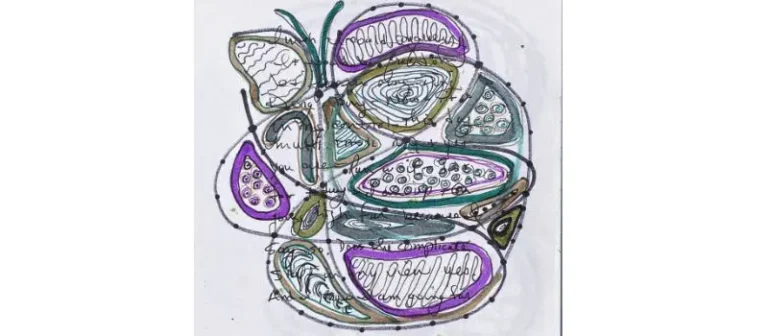
One of the reasons I created the combination of writing a few words and drawing on top of your thoughts is because the words will be hidden to prying eyes.
How often should I use these tools?
I practice as close to daily as possible. Like everything – the more you practice the better you will be at anything.
Daily practice helps most, but even one session can reduce stress and improve clarity. A common refrain in my live workshops is ‘I feel so much calmer’.

Marj Bates “I’ve spent nearly 40 years in addiction recovery, decades with The Artist’s Way, and teach The Artist’s Way Reimagined™, a slower, more supported way to work through Julia Cameron’s book The Artist’s Way – blending creative recovery tools, neurographic art, and community to help people move through resistance and stay with the process.
I’ve also changed careers later in life than most people would dare — proof that it’s never too late to begin again.”
MindSketch Lab